Resource Library

For more on 7‑1‑7—whether you need step-by-step guidance for detection and response teams or one-page overviews for decision-makers—find it here, first.
Filter by:

Objective:

Resource type:

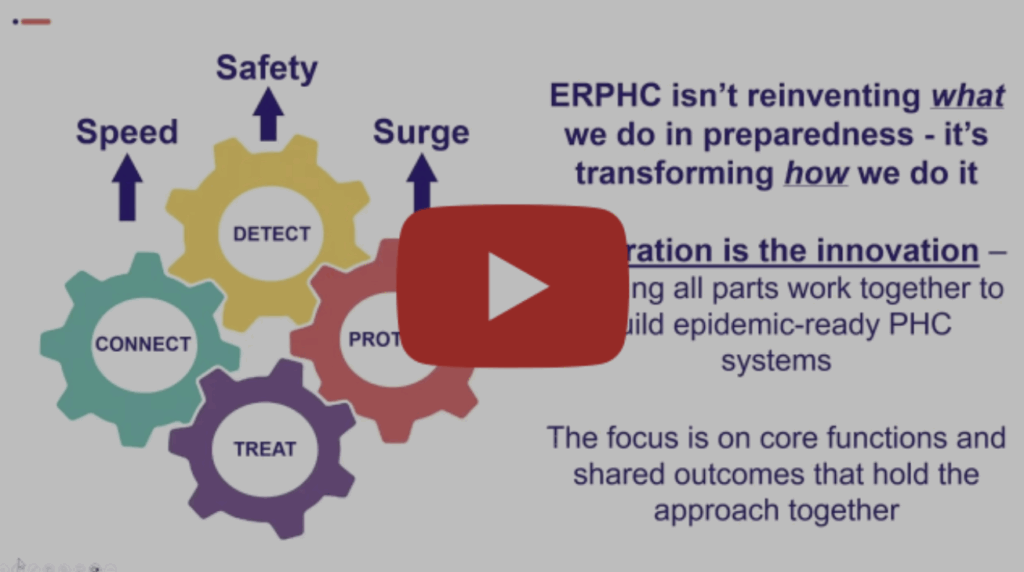
Webinar held on October 1, 2026 highlighting how Liberia and Thailand are putting their 7-1-7 data to work and which decisions it has changed. 

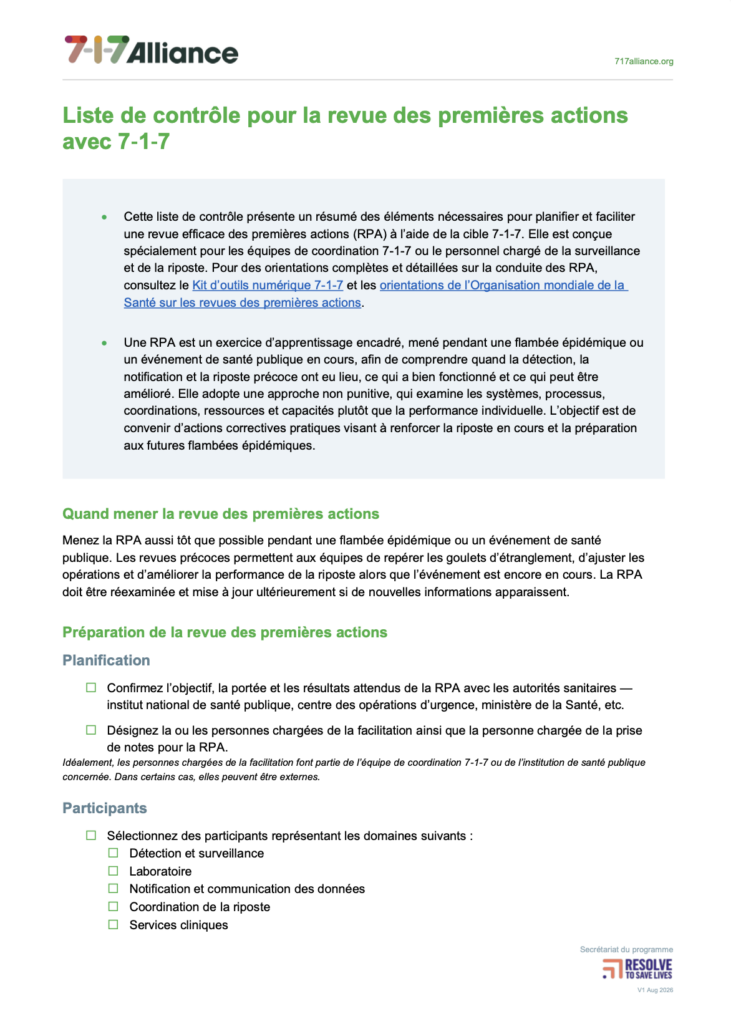
Cette liste de contrôle présente un résumé des éléments nécessaires pour planifier et faciliter une revue efficace des premières actions à l’aide de la cible 7-1-7.

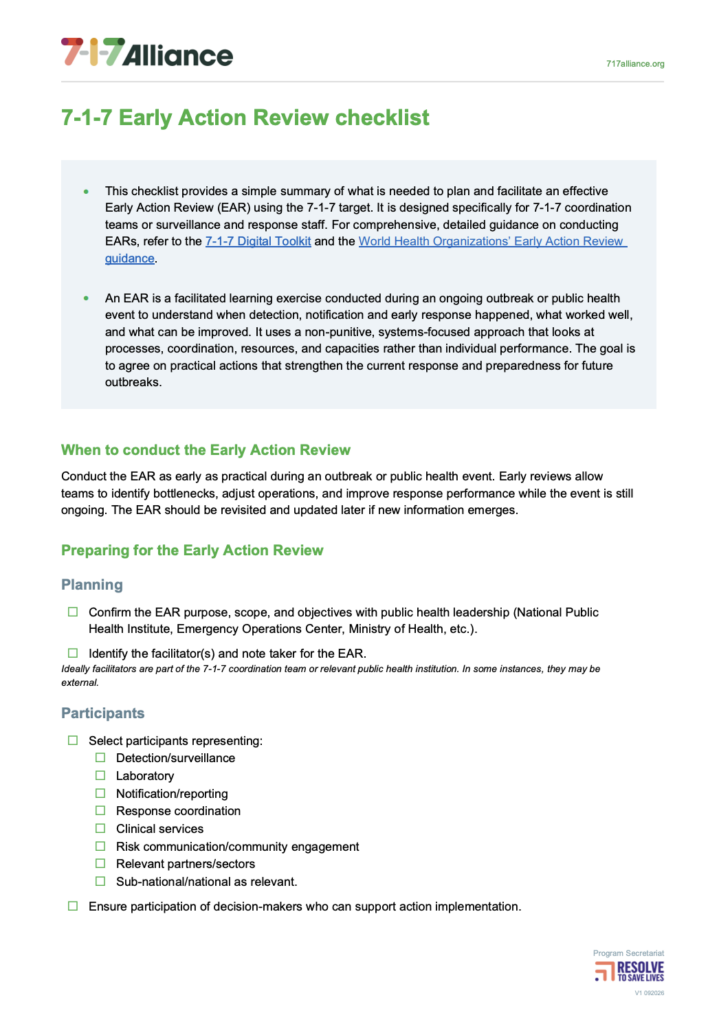
This checklist provides a simple summary of what is needed to plan and facilitate an effective Early Action Review using the 7-1-7 target. 

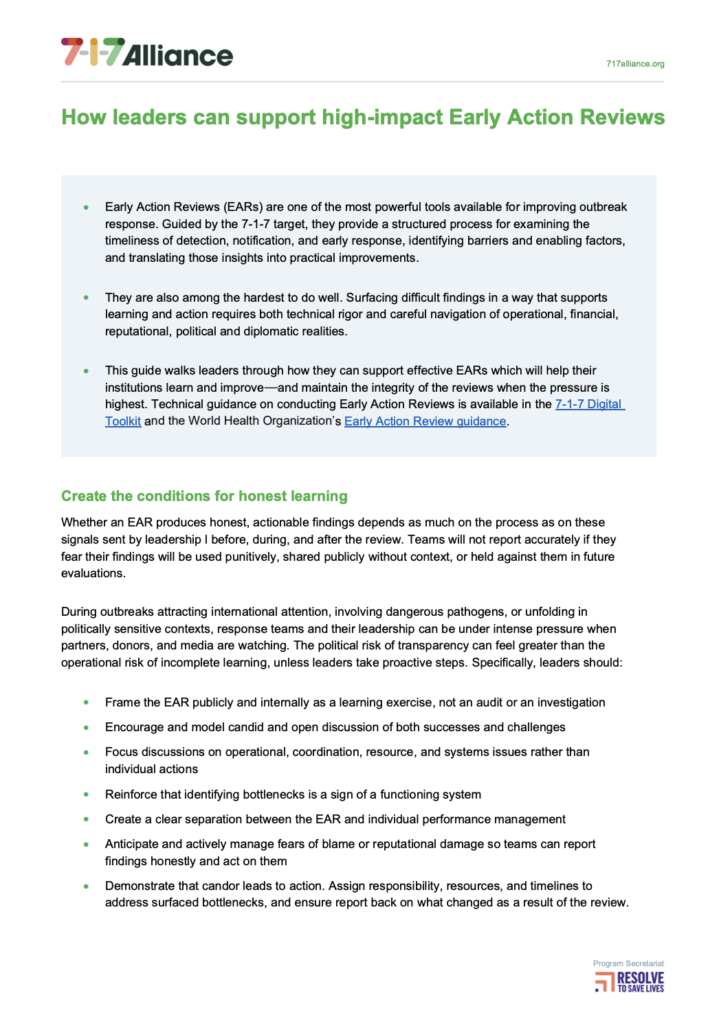
This guide walks leaders through supporting effective Early Action Reviews that help their institution learn and improve, and maintain the integrity of the reviews when the pressure is highest. 

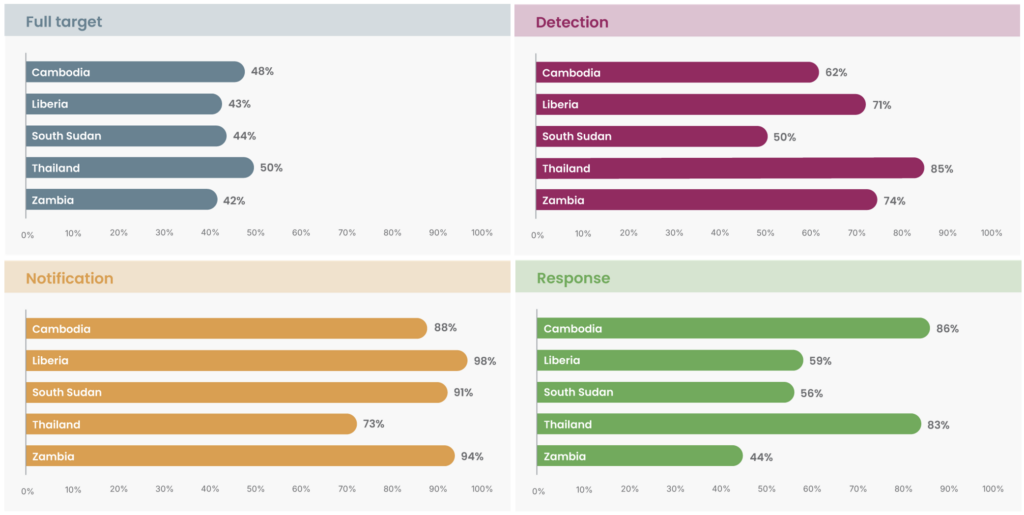
Five Wellcome-funded studies supported by the 7‑1‑7 Alliance deliver clear learnings on what 7‑1‑7 adoption looks like in Cambodia, Liberia, South Sudan, Thailand and Zambia. 

A short film from the 2026 Epidemics That Didn’t Happen report.

A short film from the 2026 Epidemics That Didn’t Happen report.

Un court-métrage du rapport 2026 sur Les épidémies auxquelles nous avons échappé.

A short film from the 2026 Epidemics That Didn’t Happen report.

Cortometraje del informe de 2026 «Epidemias que no ocurrieron».

Key resource

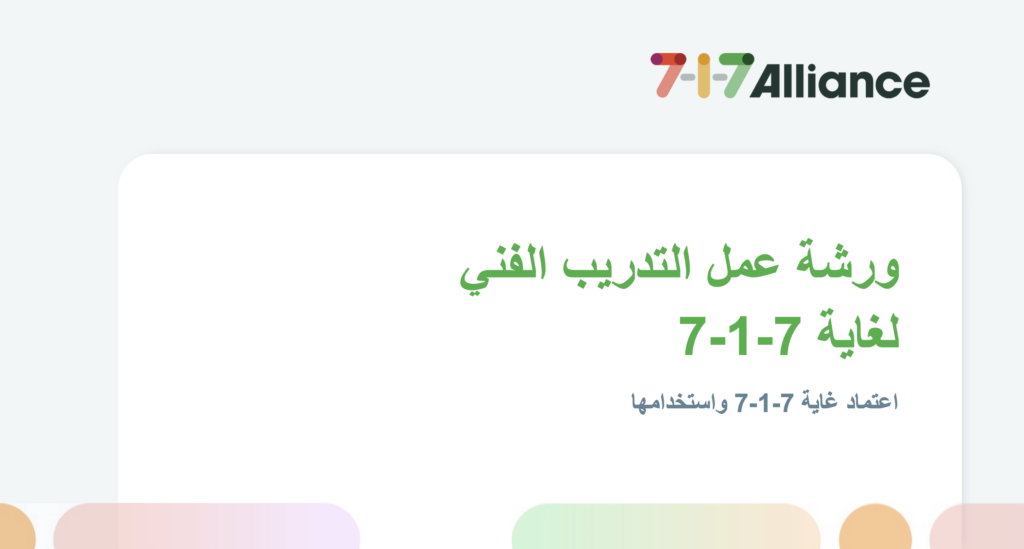
كل ما تحتاجه لعقد ورشة عمل تدريبية فنية حول منهجية “7-1-7” تمتد لأربعة أيام.

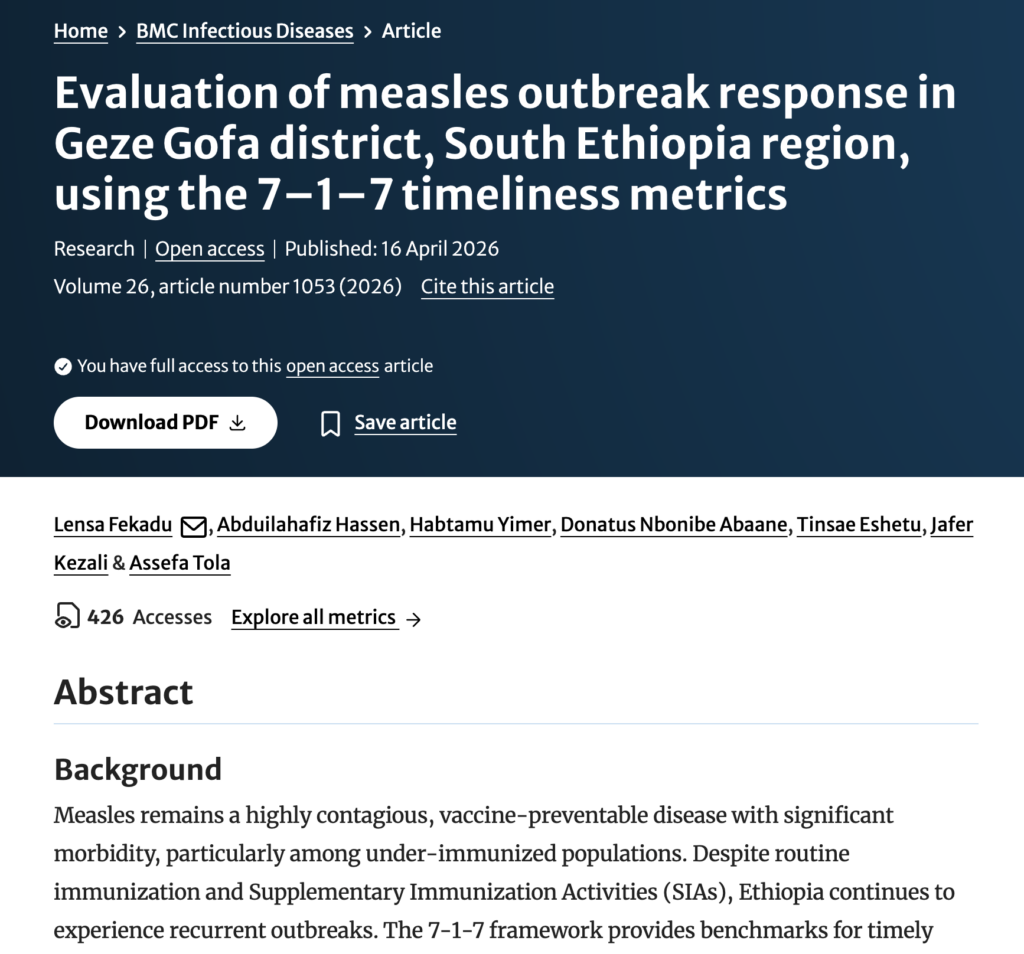
BMC Infectious Diseases article published on April 16, 2026 authored by the Ethiopian Public Health Institute, Resolve to Save Lives and the Africa Center for Disease Control and Prevention.

Session hosted by the 7-1-7 Alliance and partners at the United States’ Preparedness Summit in April 2026.

The Epidemics That Didn’t Happen film showcase how proactive public health systems are stopping local threats from becoming global crises.

Key resource

Investing in preparedness saves lives. The 7-1-7 target shows how. The Epidemics That Didn’t Happen film and case studies showcase how proactive public health systems are stopping local threats from becoming global crises.

During the Cricket World Cup, the Caribbean Public Health Agency’s new surveillance system protected residents, visitors and health systems. 

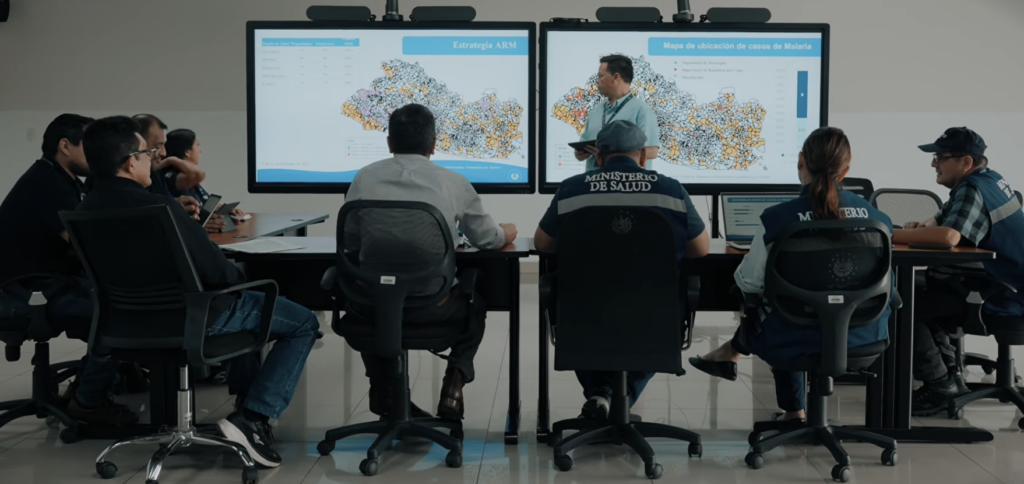
Using the 7-1-7 target, public health officials in El Salvador managed to stop the spread of imported malaria cases and maintain the nation’s malaria-free status.

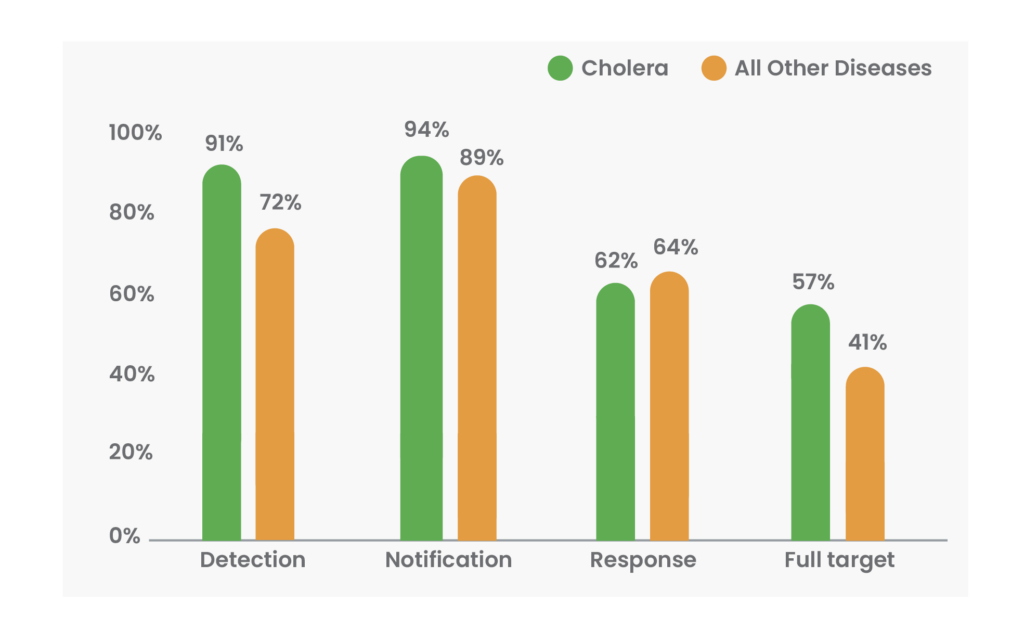
Analysis of 7-1-7 data across six countries point to a persistent challenge: In nearly two-thirds of cholera responses, coordination constraints delay critical action.

Tudo o que você precisa para sediar um workshop técnico 7-1-7 de quatro dias.

Webinar held on March 5, 2026 highlighting how countries can strengthen outbreak performance by applying groundbreaking research on timeliness to their advocacy efforts.

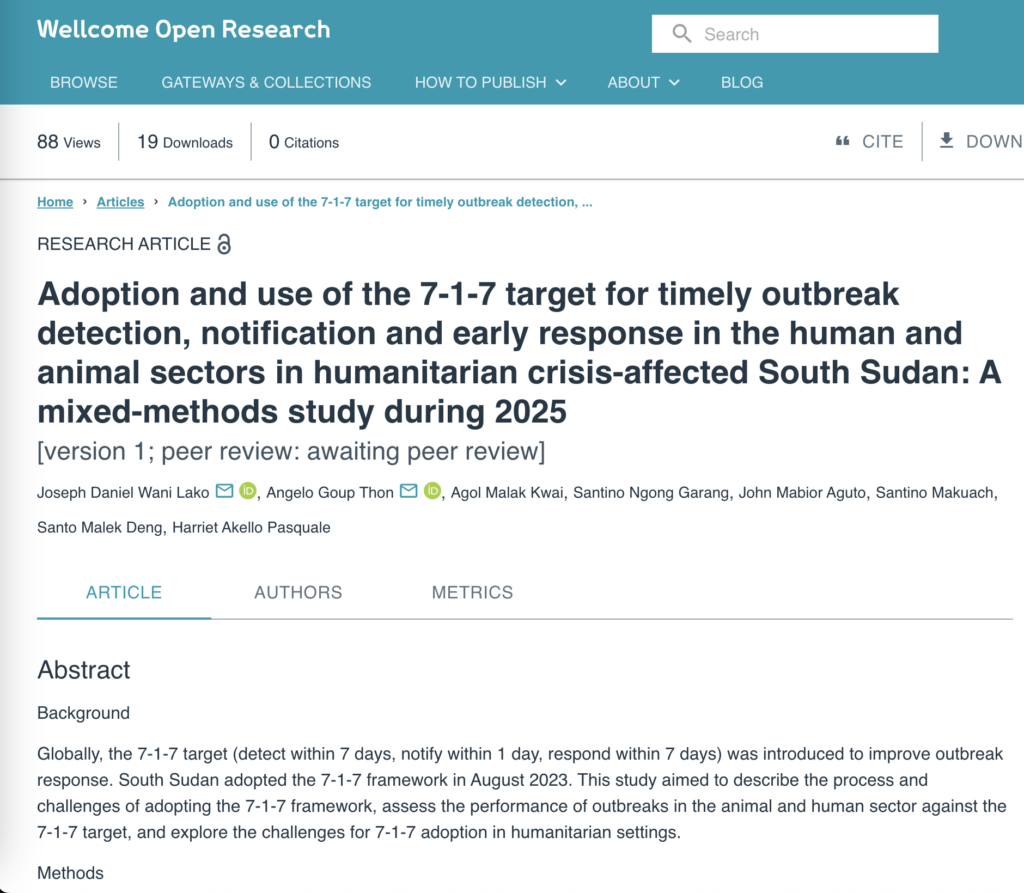
Wellcome Open Research article published on February 16, 2026. This study was conducted by 7‑1‑7 Alliance partners in South Sudan and supported by the Wellcome Trust (228152/Z/23/Z).

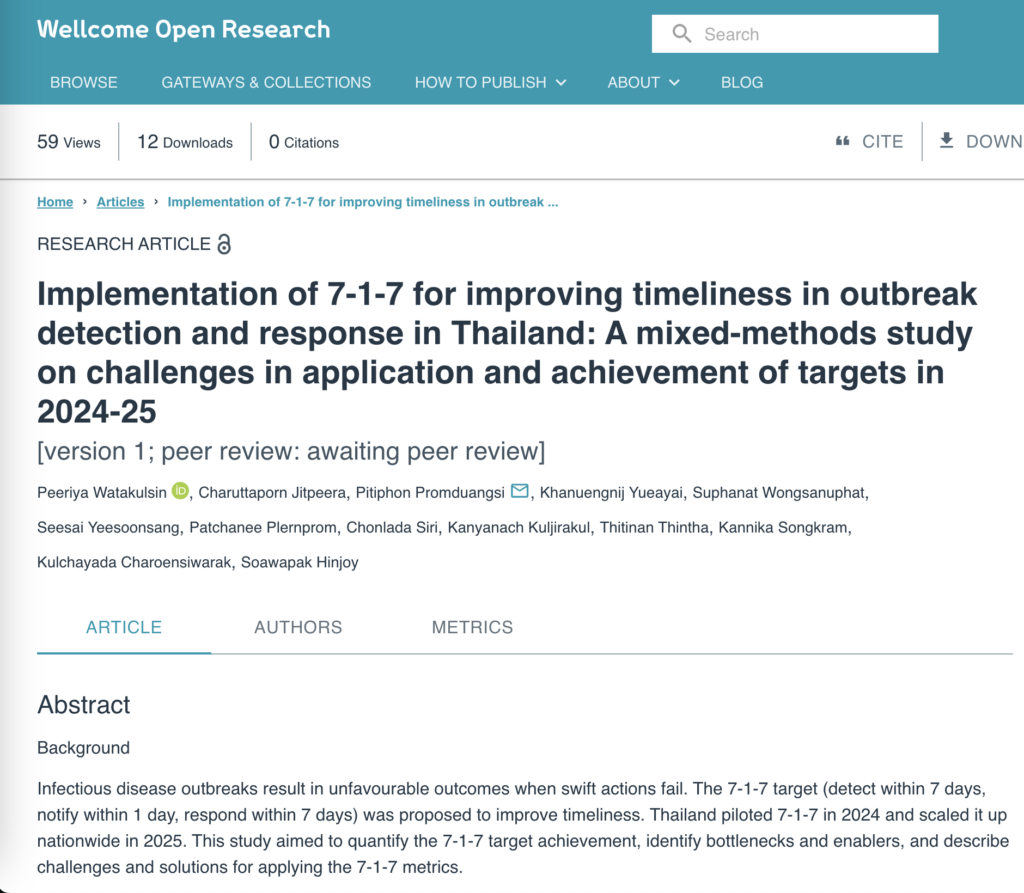
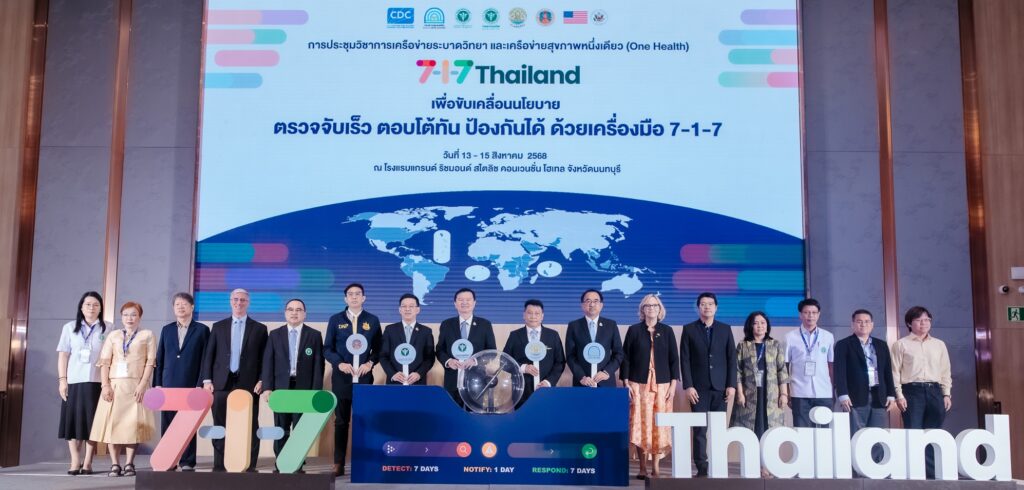
Wellcome Open Research article published on February 12, 2026. This study was conducted by 7‑1‑7 Alliance partners in Thailand and supported by the Wellcome Trust (228152/Z/23/Z).

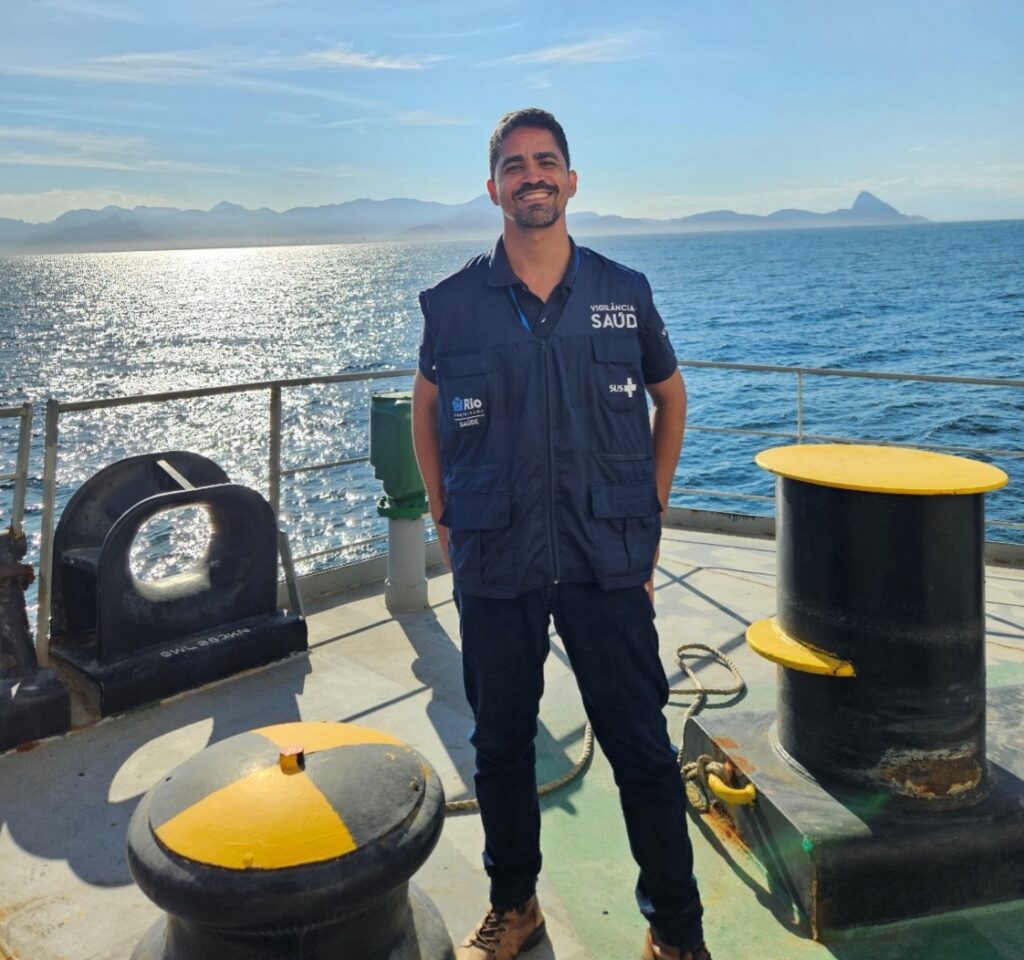
Entrevista com Caio Ribeiro, do Rio de Janeiro, Brasil, sobre como a adoção do sistema 7-1-7 mudou a cidade.

Q&A with Caio Ribeiro from Rio de Janeiro in Brazil about what 7‑1‑7 adoption has changed for the city.

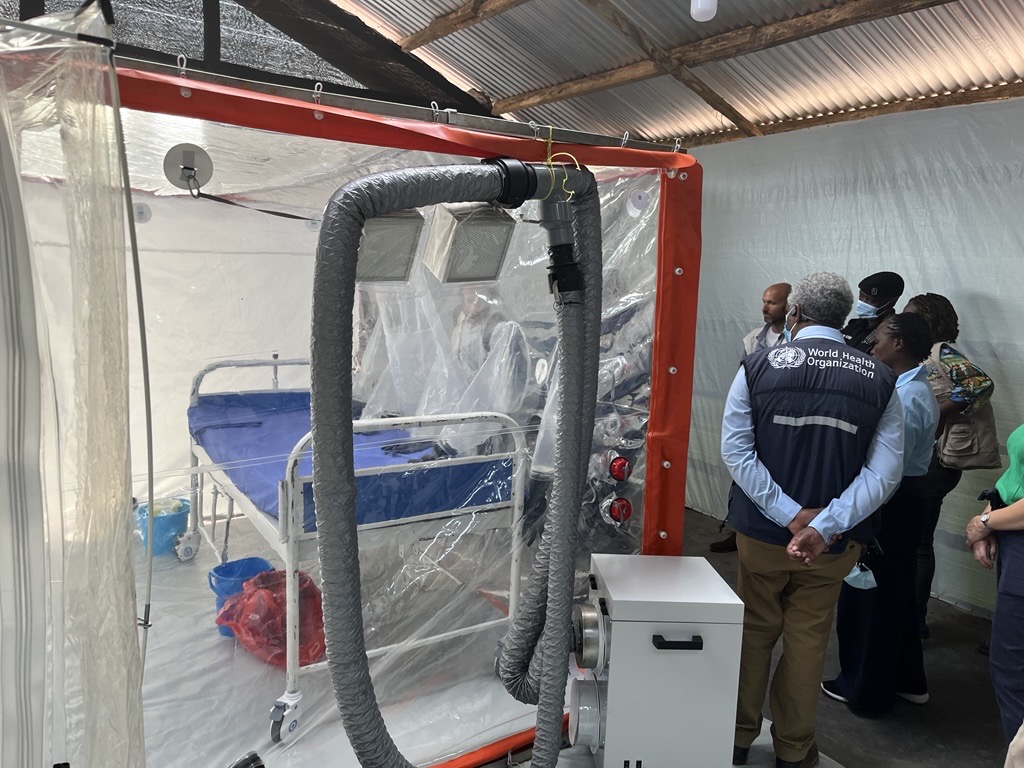
Building on lessons from earlier outbreaks, Uganda’s recent containment of Ebola shows how the 7-1-7 target is transforming public health outcomes.

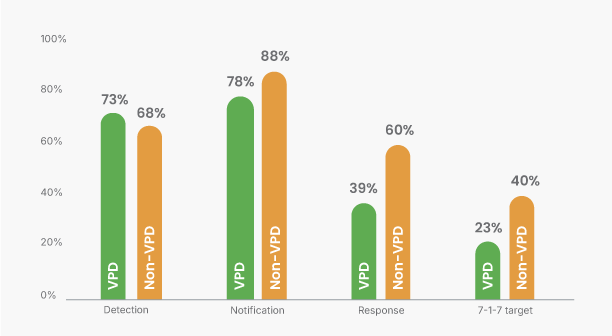
Analysis of 7-1-7 data across countries shows that only 39% of vaccine-preventable disease outbreaks meet 7-1-7’s response target.

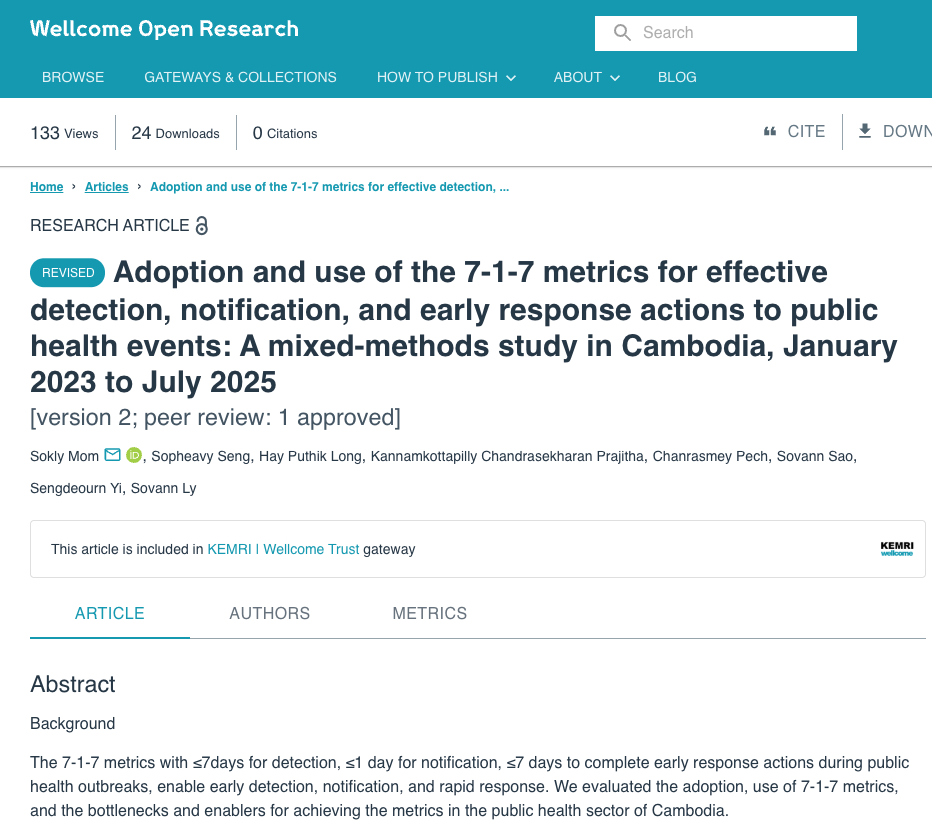
Wellcome Open Research article published on December 12, 2025. This study was conducted by 7‑1‑7 Alliance partners in Cambodia and supported by the Wellcome Trust (228152/Z/23/Z).

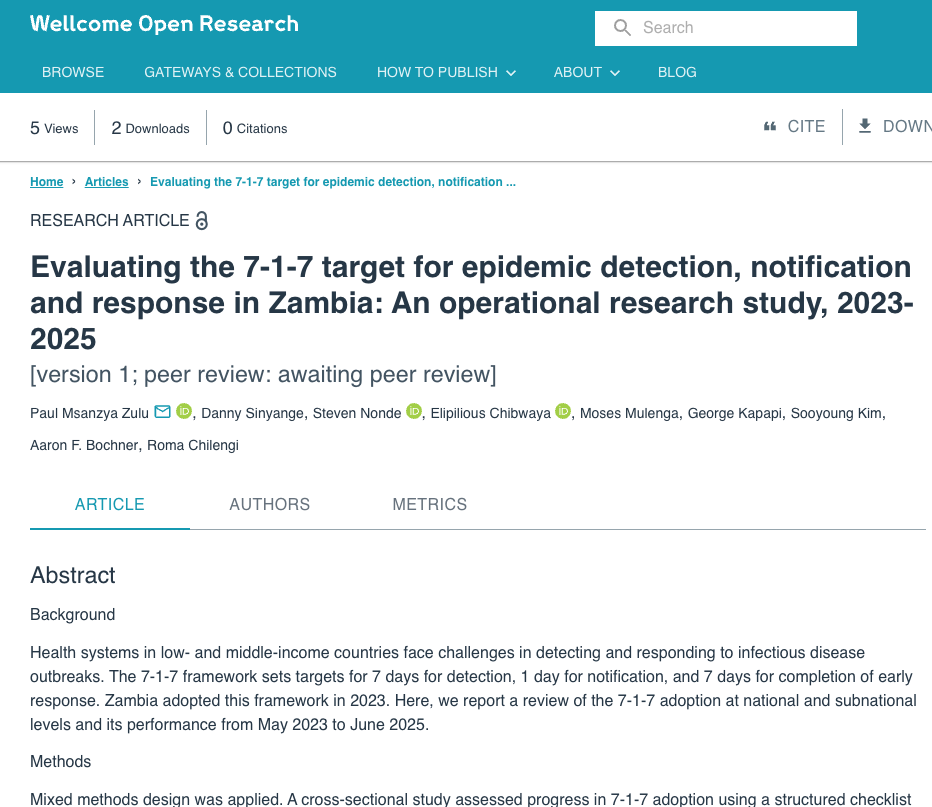
Wellcome Open Research article published on January 26, 2026. This study was conducted by 7‑1‑7 Alliance partners in Zambia and supported by the Wellcome Trust (228152/Z/23/Z).

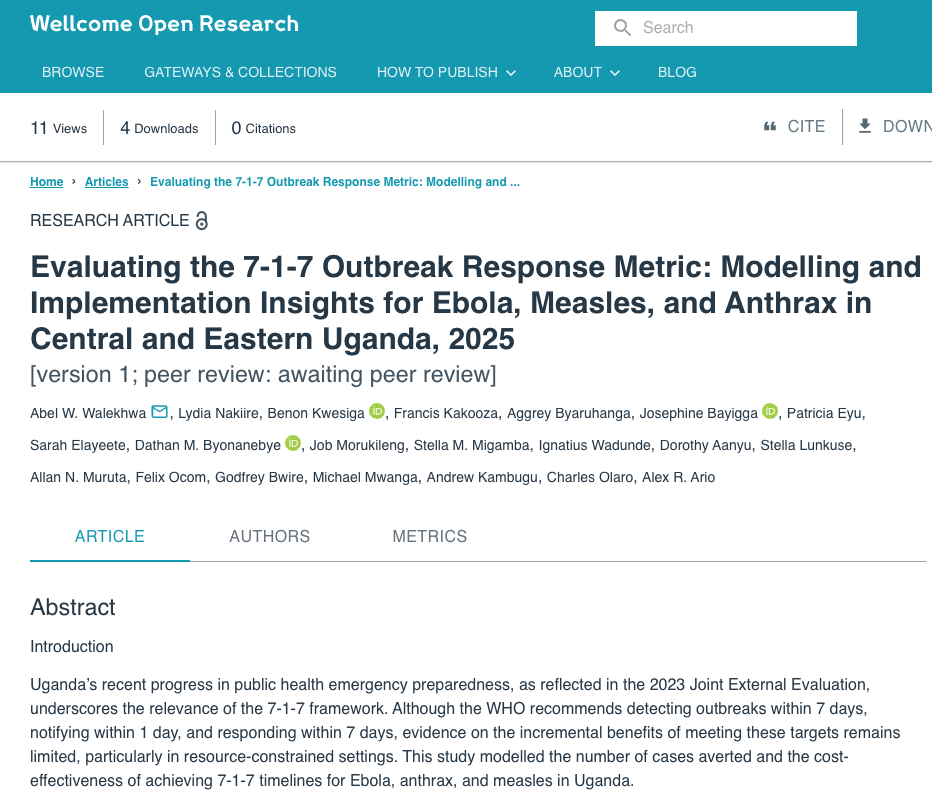
Wellcome Open Research article published on January 26, 2026. This study was conducted by 7‑1‑7 Alliance partners in Uganda and supported by the Wellcome Trust (228152/Z/23/Z).

WHO guidance for coordinating emergency response in countries, embedding the 7-1-7 target.

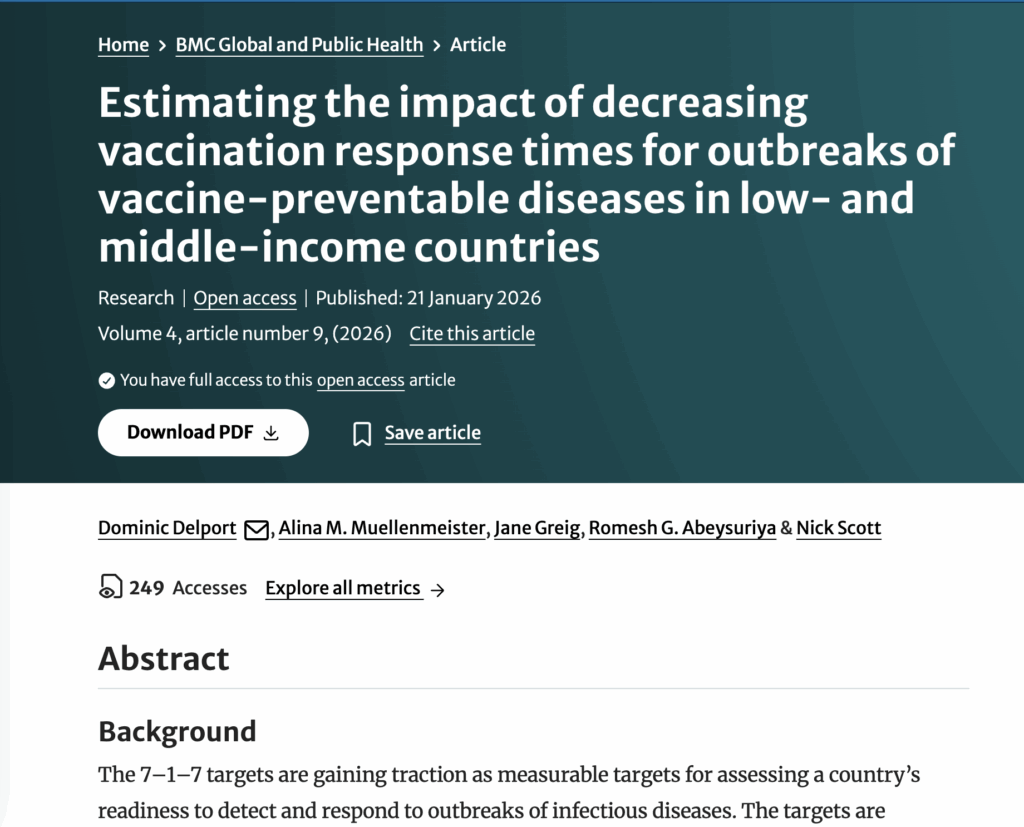
BMC Global and Public Health study published on January 21, 2026 authored by Burnet Institute, a partner of the 7-1-7 Alliance.

Q&A with Dr. Peeriya Watakulsin of Thailand’s Department of Disease Control about his country’s 7‑1‑7 journey, which began with a small regional team teaching themselves using online resources.

Um estudo de caso da 7-1-7 sobre um surto de febre amarela ocorrido no Brasil em 2002. Este vídeo faz parte de uma série de treinamentos (4/4) produzida em português pela Vital Strategies Brasil com financiamento da Aliança 7-1-7.

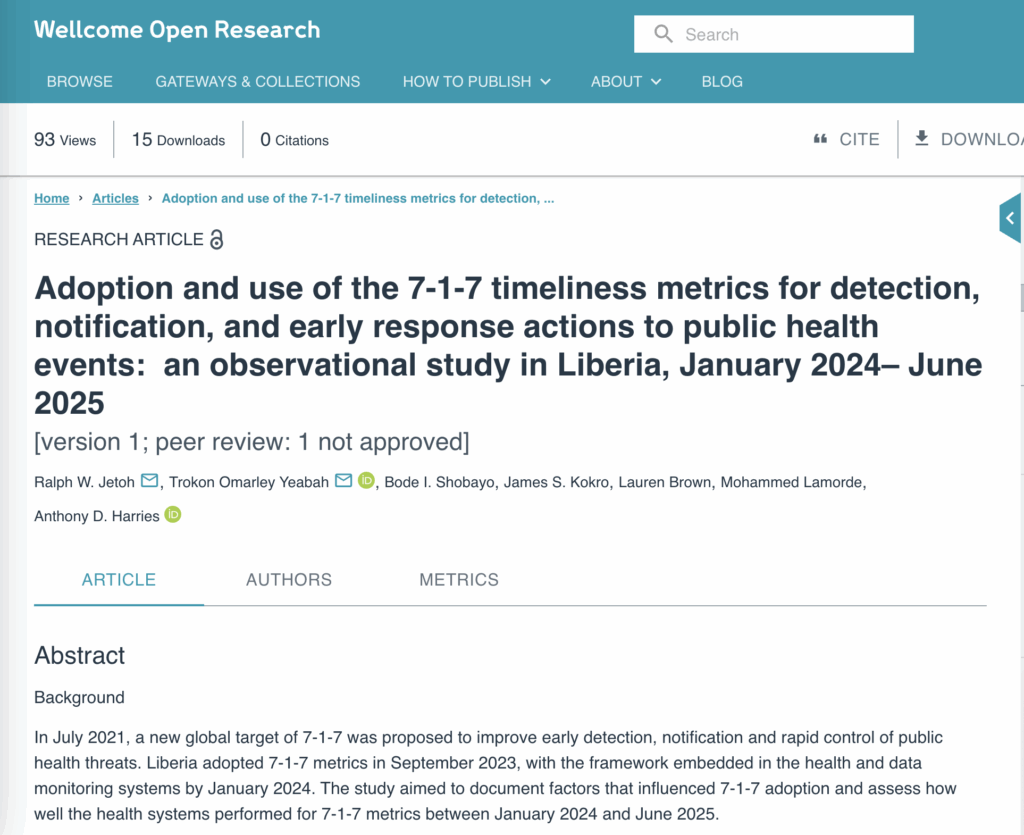
Wellcome Open Research article published on October 31, 2025. This study was conducted by 7‑1‑7 Alliance partners in Liberia and supported by the Wellcome Trust (228152/Z/23/Z).

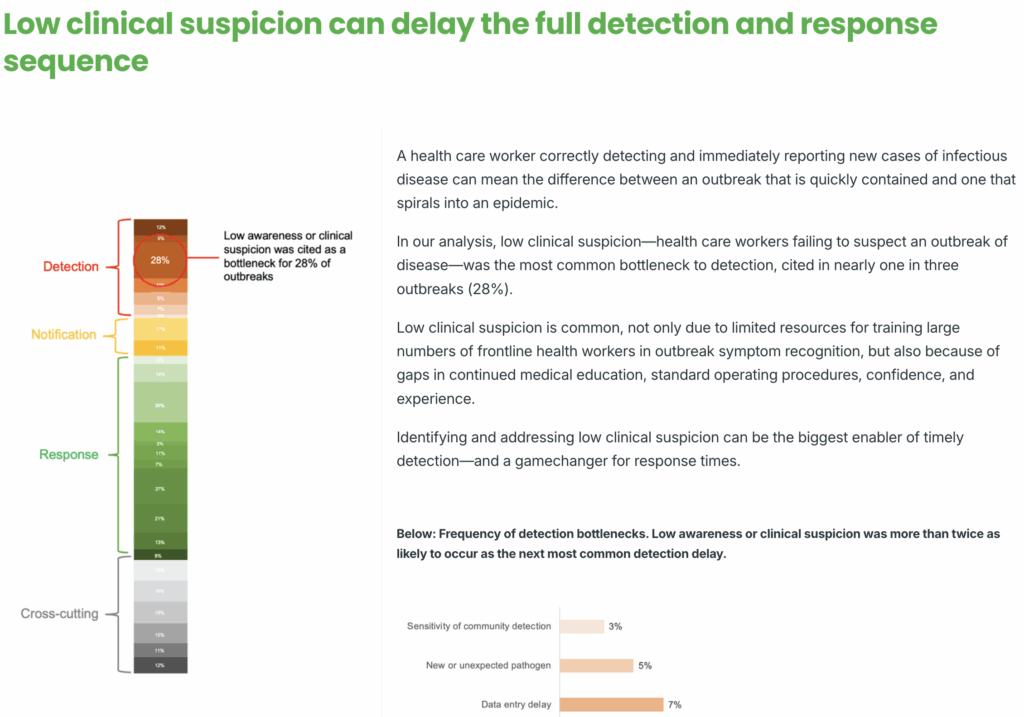
Webinar held on November 25, 2025 highlighting how improving clinical suspicion can be the biggest enabler of timely outbreak detection.

Todo lo que necesitas para organizar un taller de capacitación técnica 7-1-7 de cuatro días, incluyendo instrucciones para el facilitador, presentaciones y actividades prácticas.

Tout ce dont vous avez besoin pour organiser une formation technique à 7-1-7 de quatre jours : instructions, présentations et activités pratiques.

Key resource

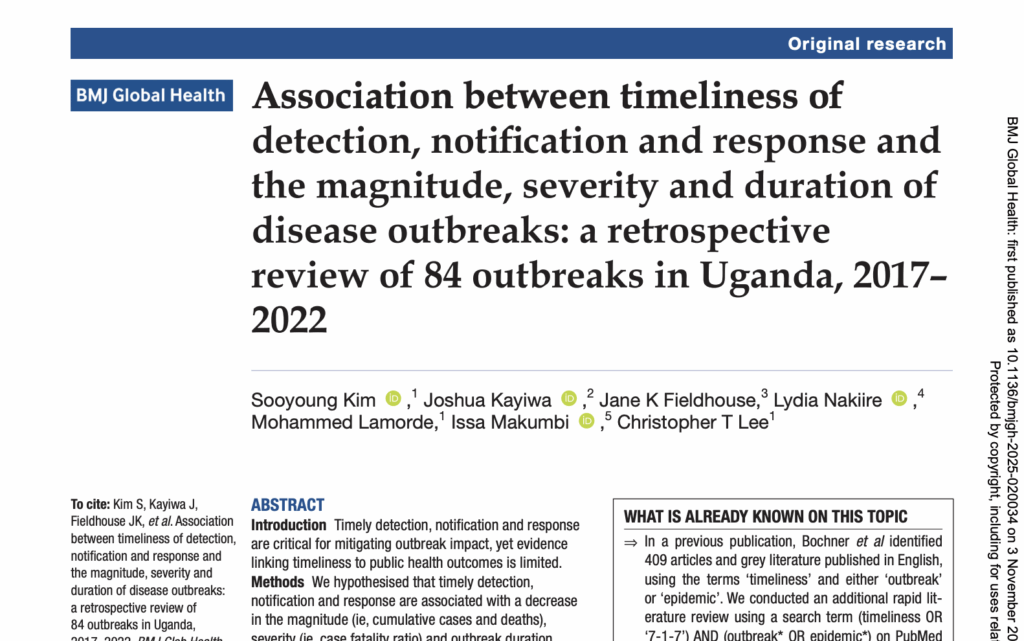
BMJ Global Health article published on November 3, 2025 co-authored by the 7-1-7 Alliance, Resolve to Save Lives and Uganda.

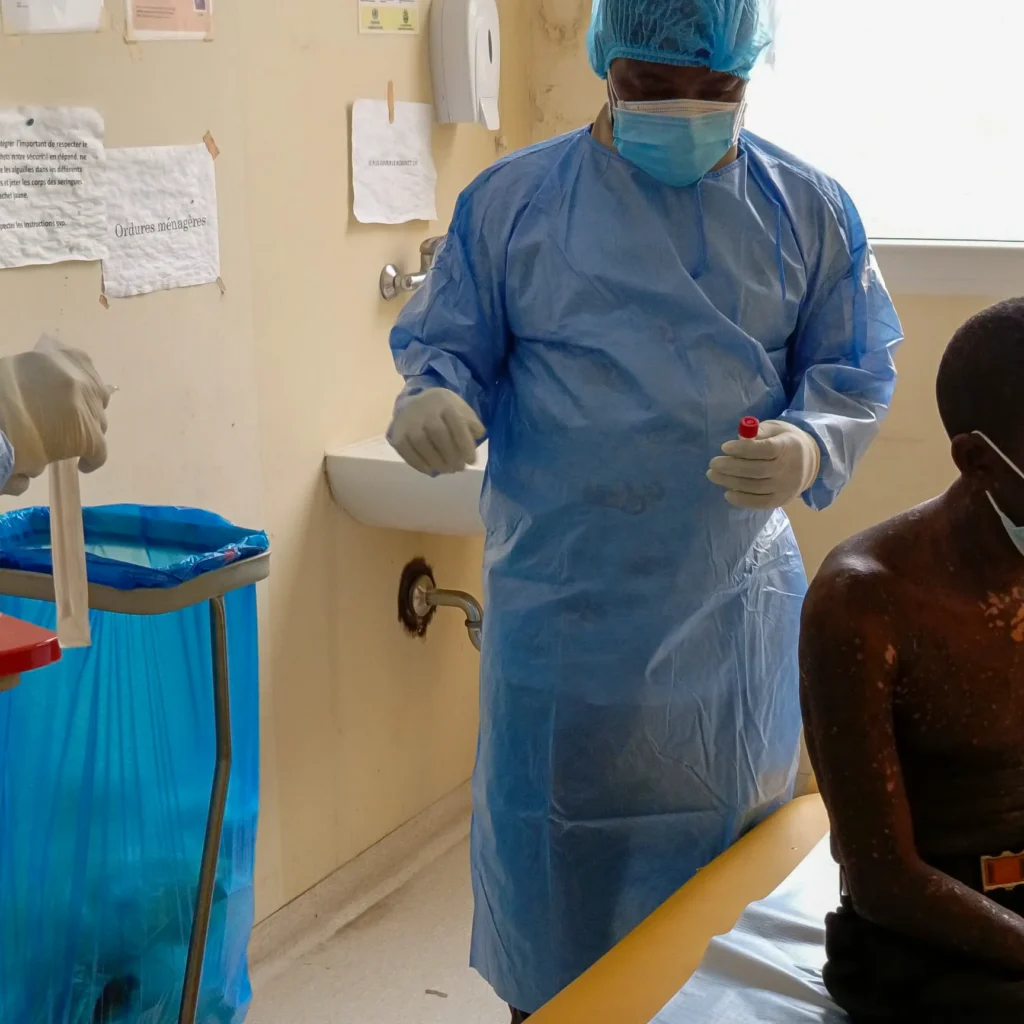
In the middle of a public health emergency across the Africa region, Gabon’s public health officials quickly stopped an mpox outbreak, meeting the 7-1-7 target with two confirmed cases.

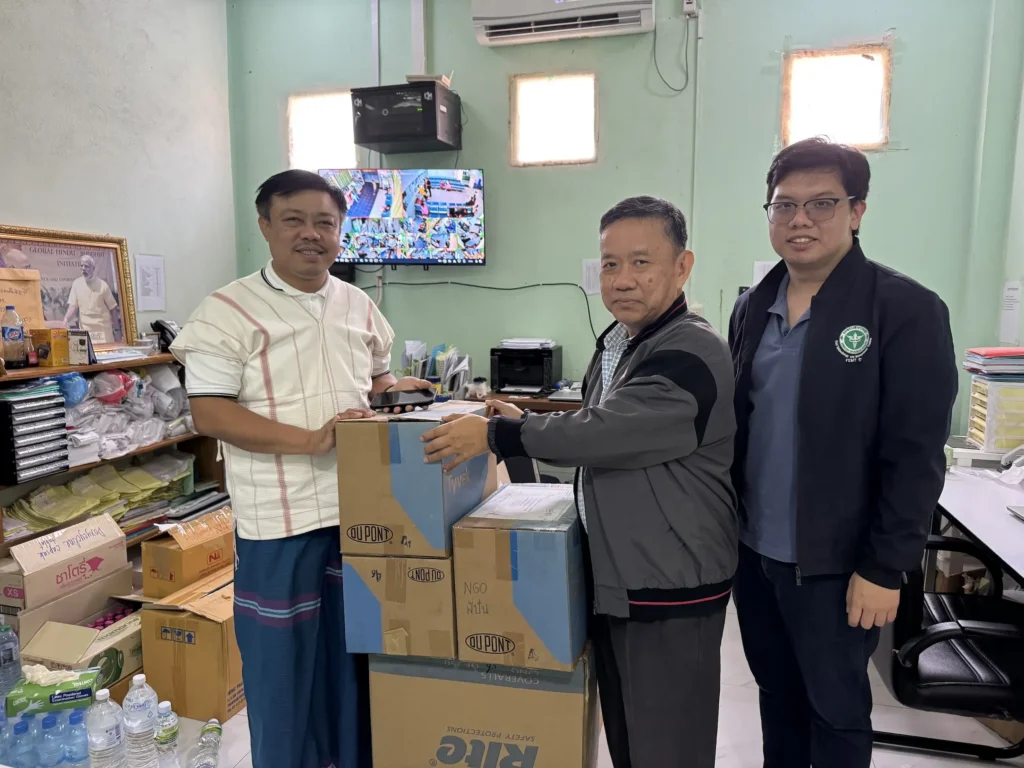
A cross-border collaboration successfully contained a cholera outbreak that began near the Thailand-Myanmar border, after applying lessons from an earlier 7-1-7 assessment.

Trabajemos juntos ahora para detener los brotes antes de que se propaguen.

Analysis of 7-1-7 data across countries shows that low clinical suspicion is the most common bottleneck to detection, cited in nearly one in three outbreaks.

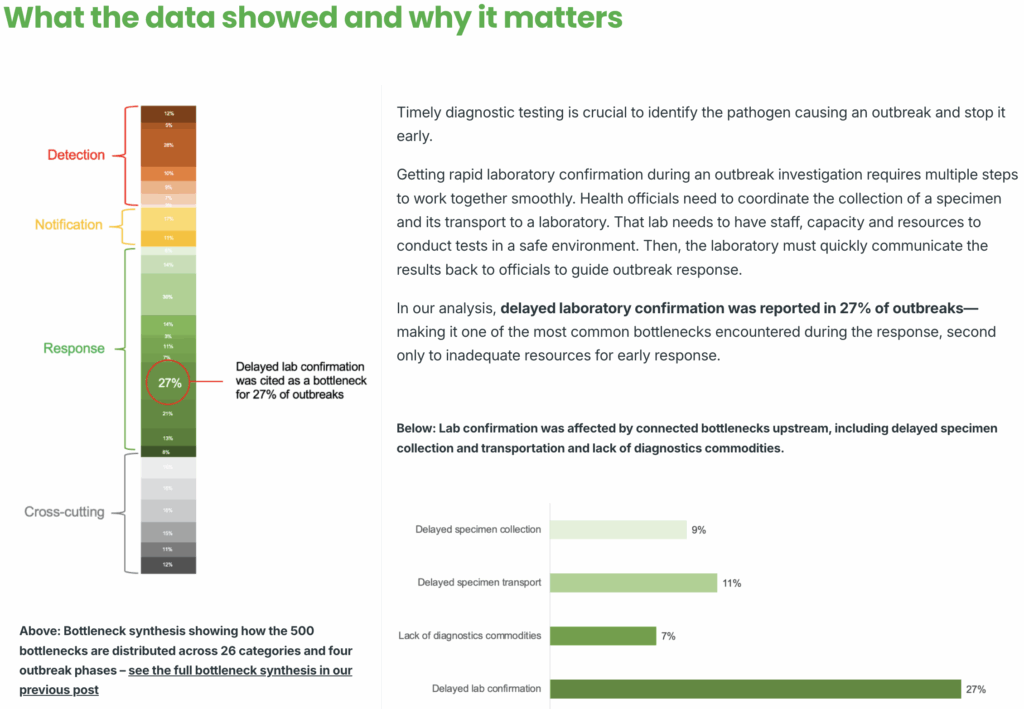
Analysis of 7-1-7 data across countries shows that delayed laboratory confirmation is one of the most common bottlenecks to timely outbreak response – reported in 27% of outbreaks.


An interactive deep dive into the adoption of the 7‑1‑7 target to take at your own pace.

Utilizando a meta 7-1-7 para identificar gargalos e oportunidades de melhoria. Este vídeo faz parte de uma série de treinamentos (3/4) produzida em português pela Vital Strategies Brasil com financiamento da Aliança 7-1-7.

Utilizando a meta 7-1-7 para aprimoramento de desempenho. Este vídeo faz parte de uma série de treinamentos (2/4) produzida em português pela Vital Strategies Brasil com financiamento da Aliança 7-1-7.

Qual é a meta 7-1-7? Este vídeo faz parte de uma série de treinamentos (1/4) produzida em português pela Vital Strategies Brasil com financiamento da Aliança 7-1-7.

Faster detection, improved coordination and earlier responses saved lives in two recent state-level outbreaks and positioned Nigeria as a regional leader in digital preparedness.

Key resource

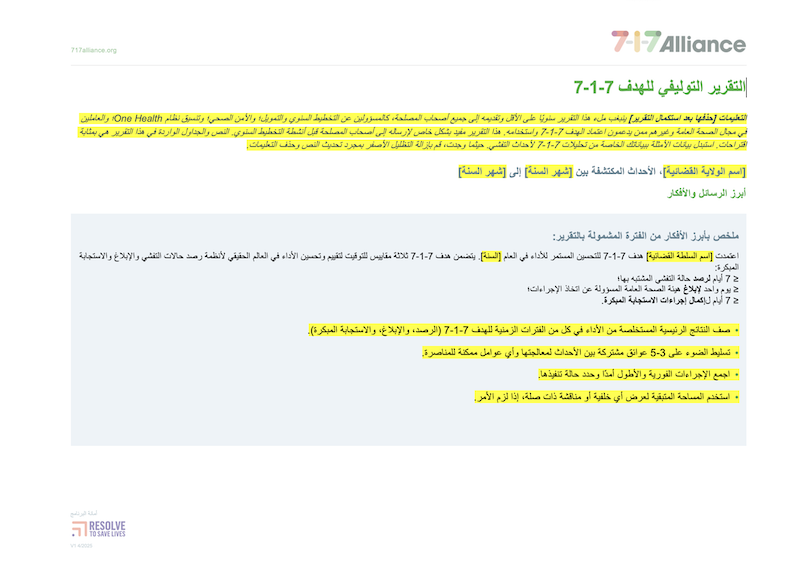
قالب Word يستخدم لتوفير ملخص عالي المستوى للتعلم من 7-1-7، ومراجعة التقدم، وتوحيد الإجراءات طويلة المدى.

1 2 3 4

The 7-1-7 Alliance is a project of Resolve to Save Lives, Inc. In keeping with Resolve to Save Lives’ commitment to open access, all RTSL-owned materials in this Resource Library are made freely available under a Creative Commons CC BY-NC-SA 4.0 license with attribution for non-commercial use, adaptation, and sharing.