
2026 Epidemics That Didn’t Happen report
Investing in preparedness saves lives. The 7-1-7 target shows how. The Epidemics That Didn’t Happen film and case studies showcase how proactive public health systems are stopping local threats from becoming global crises.
7-1-7 retrospective review of school outbreaks in Pima County
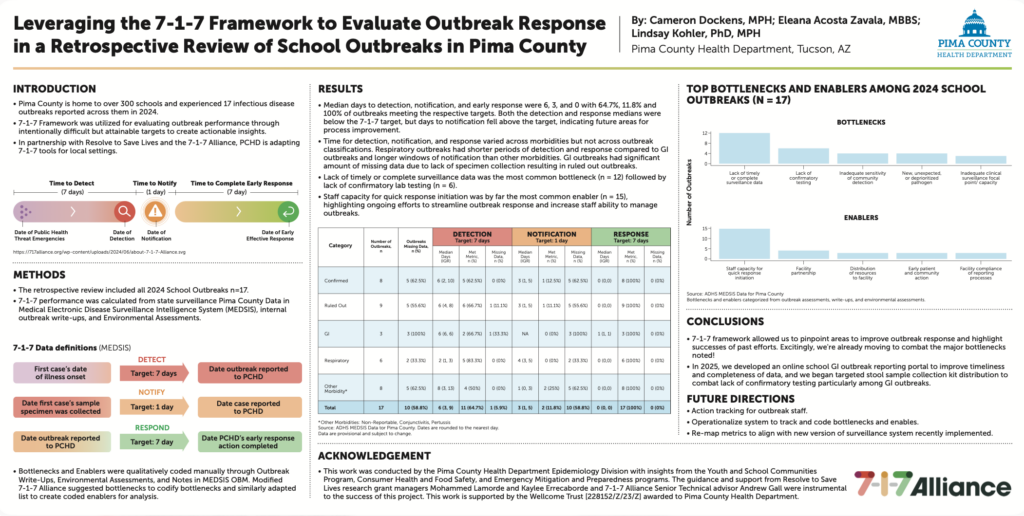
Poster presented by 7-1-7 Alliance partner’s Pima County Health Department at the United States’ Preparedness Summit in April 2026.
Implementing high reliability principles through 7-1-7
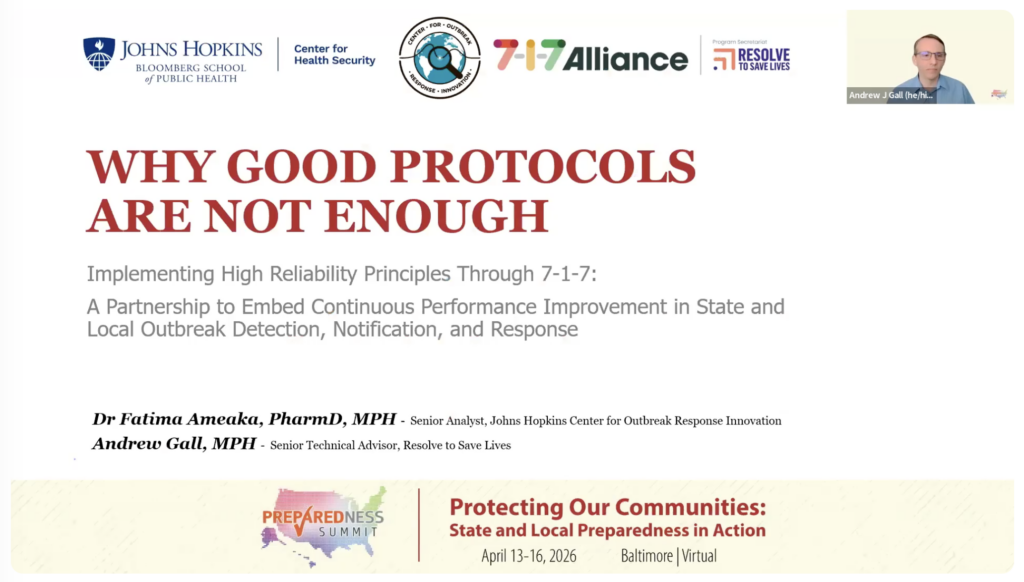
Session hosted by the 7-1-7 Alliance and CORI at the United States’ Preparedness Summit in April 2026.
Epidemics That Didn’t Happen: An early warning system in the Caribbean stops outbreaks before they start

During the Cricket World Cup, the Caribbean Public Health Agency’s new surveillance system protected residents, visitors and health systems.
Epidemics That Didn’t Happen: How El Salvador acted quickly to contain a malaria outbreak
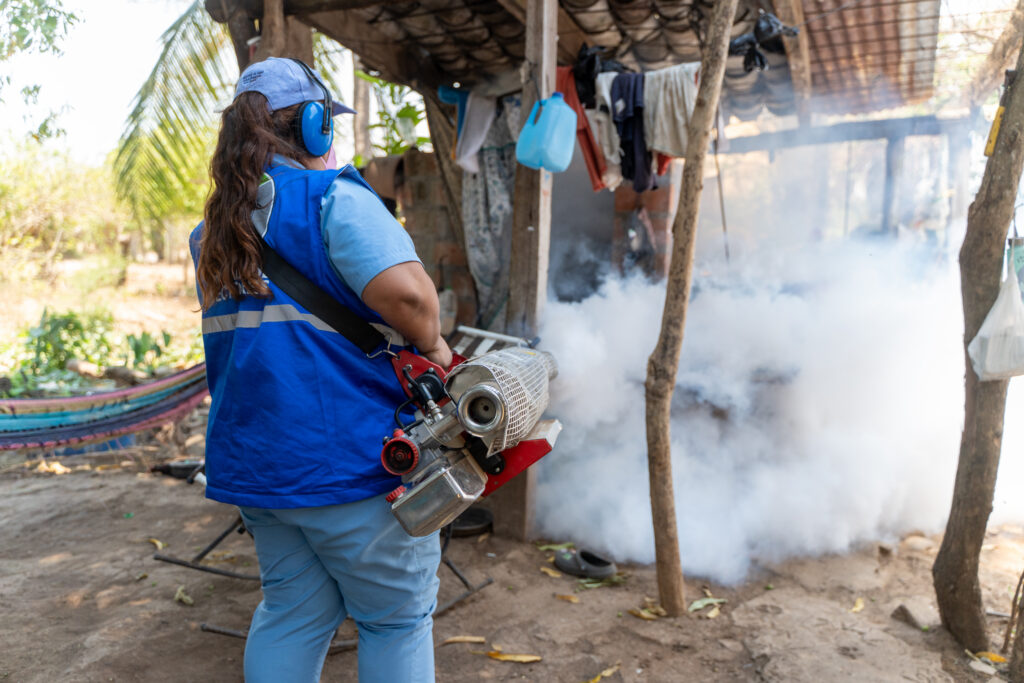
Using the 7-1-7 target, public health officials in El Salvador managed to stop the spread of imported malaria cases and maintain the nation’s malaria-free status.
7-1-7 pilots in U.S. local health departments
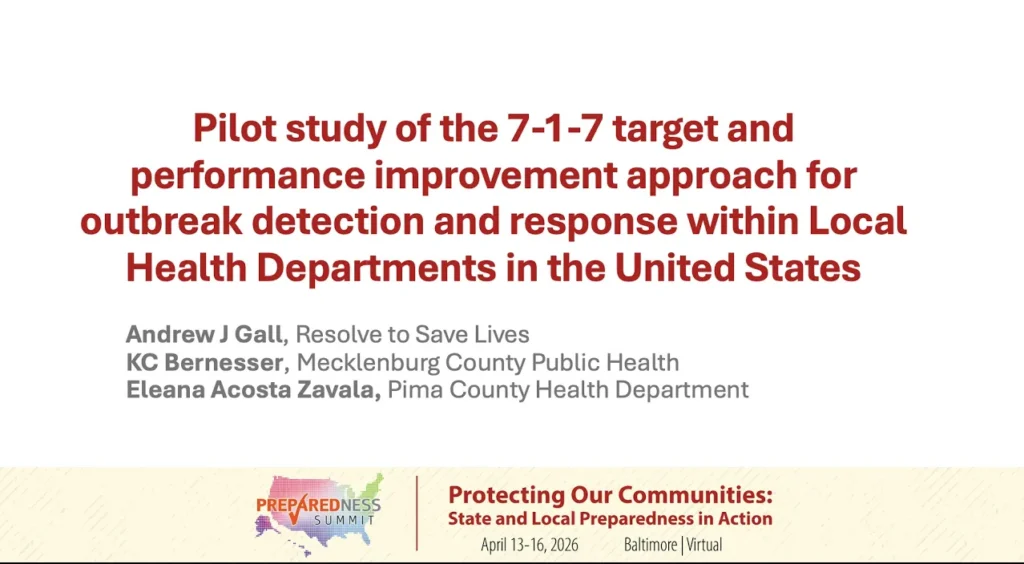
Session hosted by the 7-1-7 Alliance and partners at the United States’ Preparedness Summit in April 2026.
7-1-7 data insights: Why cholera response can’t keep pace with detection
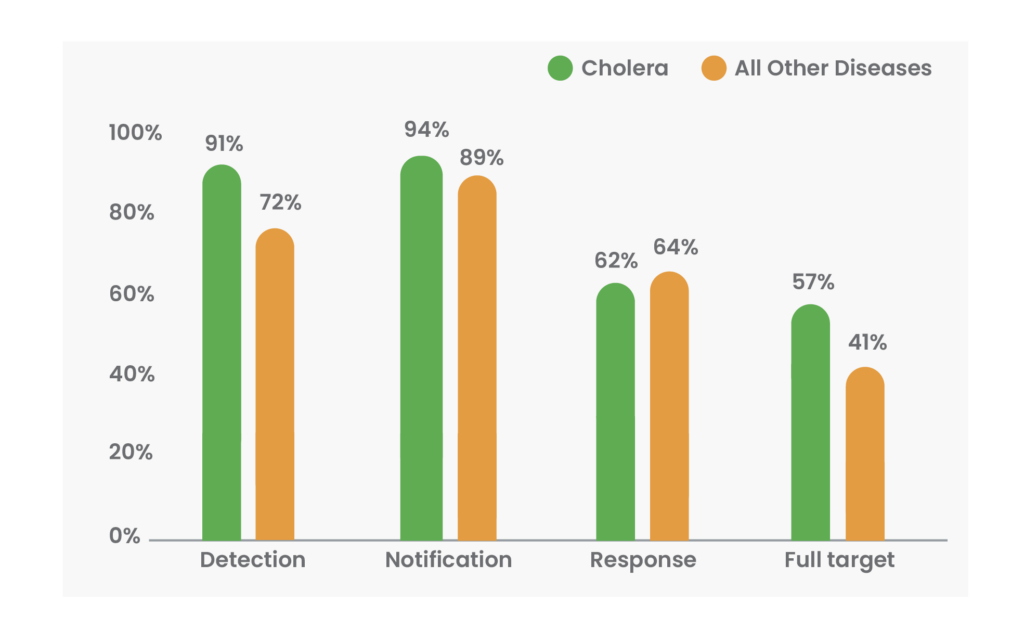
Analysis of 7-1-7 data across six countries point to a persistent challenge: In nearly two-thirds of cholera responses, coordination constraints delay critical action.
Webinar: Speed saves lives: Leveraging new evidence on 7‑1‑7 to improve outbreak performance

Webinar held on March 5, 2026 highlighting how countries can strengthen outbreak performance by applying groundbreaking research on timeliness to their advocacy efforts.
7-1-7 adoption and use in the human and animal sectors in humanitarian crisis-affected South Sudan: A mixed-methods study, 2025
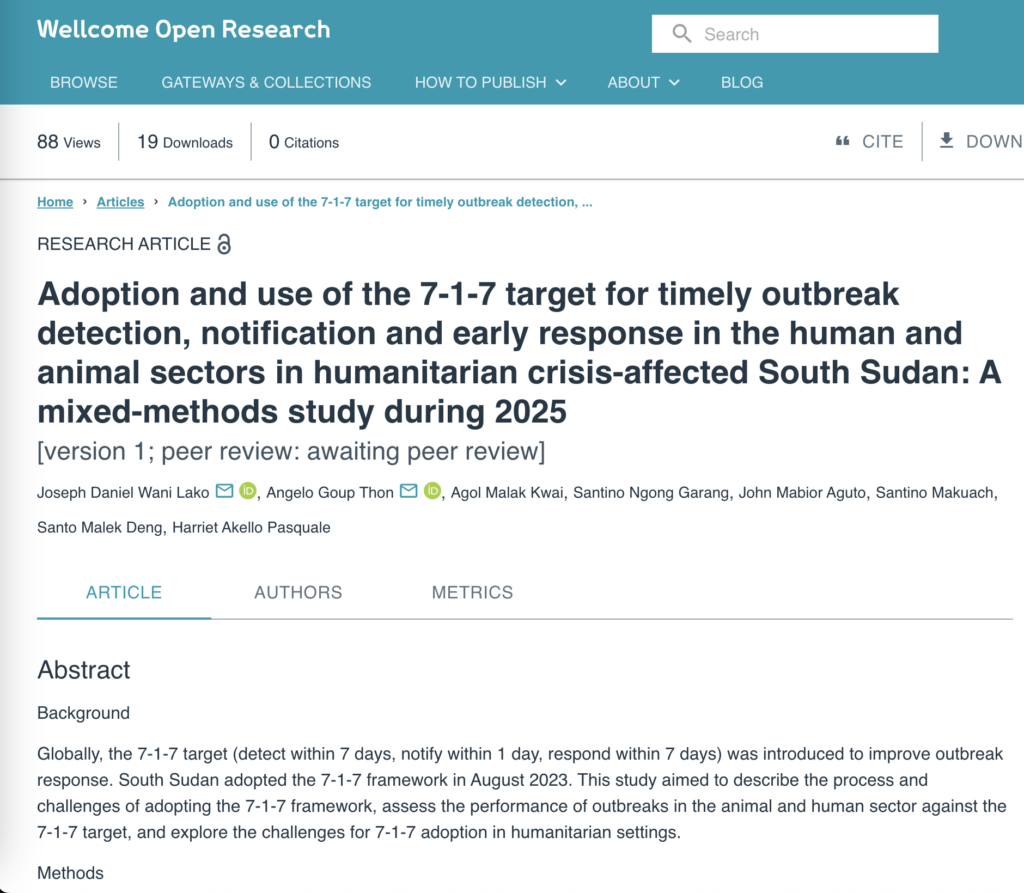
Wellcome Open Research article published on February 16, 2026. This study was conducted by 7‑1‑7 Alliance partners in South Sudan and supported by the Wellcome Trust (228152/Z/23/Z).
7-1-7 implementation in Thailand: A mixed-methods study on challenges in application and achievement of the target in 2024-25
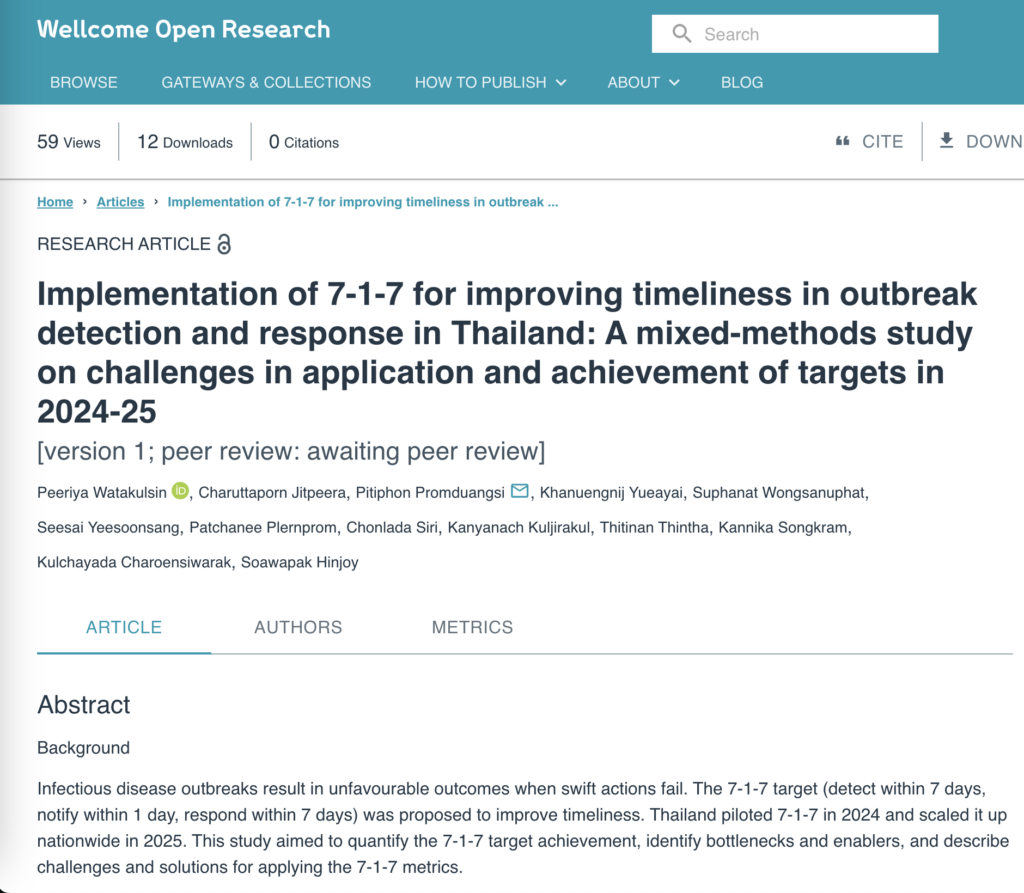
Wellcome Open Research article published on February 12, 2026. This study was conducted by 7‑1‑7 Alliance partners in Thailand and supported by the Wellcome Trust (228152/Z/23/Z).