Get Started

Advocate for 7‑1‑7

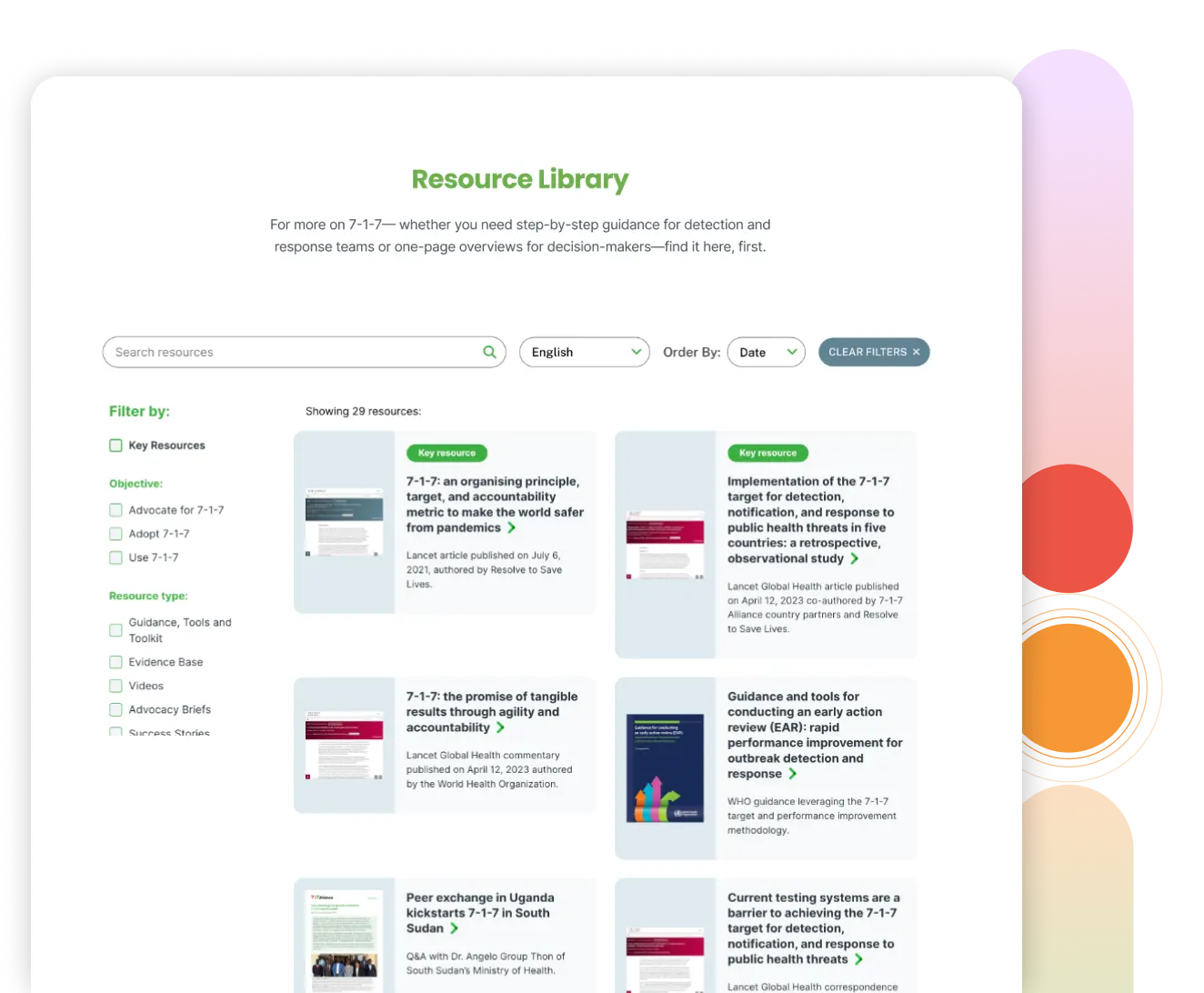
A key to the successful use of the 7-1-7 target to improve early detection and response is for stakeholders to understand its value-add. We have compiled a series of advocacy briefs, journal articles, introductory videos and webinars, and success stories to provide a brief but comprehensive overview of 7-1-7 to help you advocate for the target and mobilize support among key stakeholders.

Adopt & use 7‑1‑7

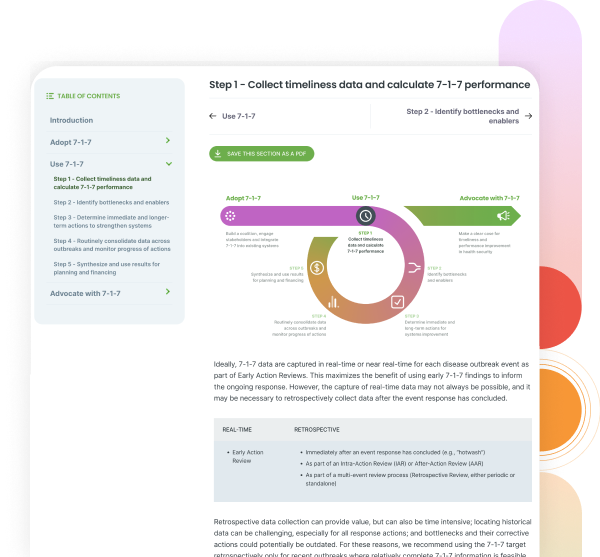
Learn in our toolkit how the 7-1-7 target can be used in real time with Early Action Reviews––or retrospectively––to identify bottlenecks and enablers of timely detection, notification and early response, and find corrective actions.

Our toolkit also covers 7-1-7 adoption, which includes engaging stakeholders and integrating 7-1-7 into existing workflows––and is critical to successful implementation.

Training

Online courses

Take our free interactive online courses to learn about the 7-1-7 target at your own pace.

introduction to 7-1-7 target. Online course hero image. lady wearing headphones

Introduction to the 7-1-7 target

using the 7-1-7 target. online course hero image. man wearing headphones

Using the 7-1-7 target

Adopting the 7-1-7 target

Workshop training packages

Our interactive training packages are available in multiple languages. Each package contains what you need to host a 7-1-7 training workshop: instructions, presentations, hands-on activities, discussion topics, etc.

7‑1‑7 orientation training package 7‑1‑7 technical training package
Audience Wide audience that has no or limited experience with the 7‑1‑7 target, from frontline workers to high-level decision-makers or funders Public health professionals implementing 7‑1‑7
Learning objective Get familiar with the 7‑1‑7 target and how it can be used Adopt the 7‑1‑7 target in-country and use it for performance improvement
Length 1 day, can be adapted to a half day 4 days
Setting In-person, virtual, hybrid In-person, virtual, hybrid
Download English
French
Portuguese
Spanish

Arabic (coming soon)
English
French

Portuguese (coming soon)
Spanish
Arabic (coming soon)

Community of Practice

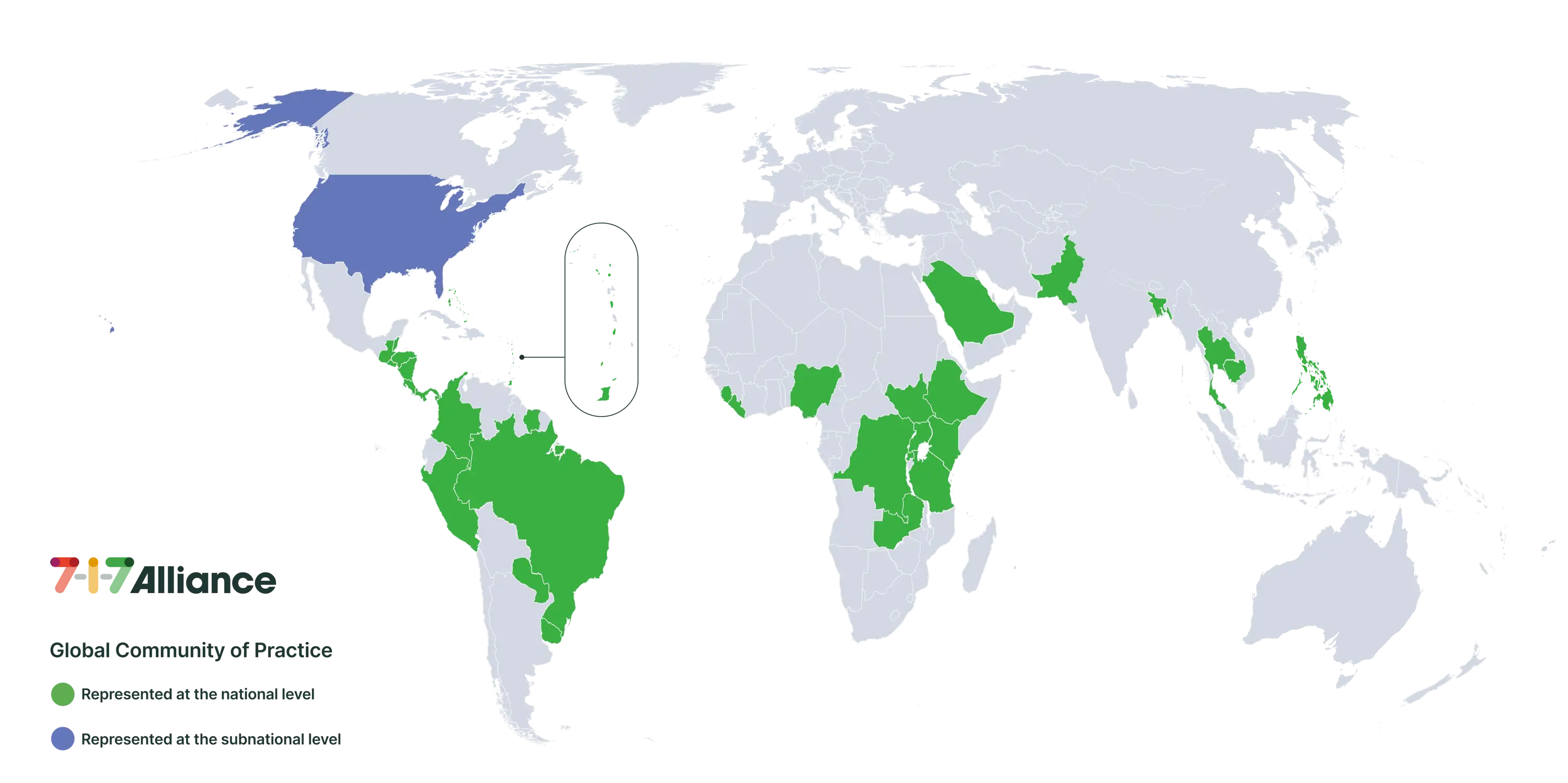
The 7-1-7 Alliance hosts a global Community of Practice to accelerate learning and implementation success of the 7-1-7 target through real-time knowledge exchange, peer-to-peer networking, and adaptive learning. More than 40 countries have already joined the community, all at different stages of adoption and use of the target.

Who can participate in the Community of Practice?

The Community of Practice is designed for technical teams implementing 7-1-7 and Early Action Reviews. 7-1-7 Alliance country partners are automatically invited to join when they become partners.

Other interested countries and partners may request to join by completing a request form.

What can new members expect?

Members of the Community of Practice:

  • explore adoption and use of the 7‑1‑7
    target in country context
  • identify challenges and drivers for performance improvement
  • evaluate 7‑1‑7
    implementation
  • conduct research to strengthen evidence-based implementation

What do Community of Practice activities include?

Activities include:

  • Regular community engagement sessions with focused discussions and country spotlights
  • Access to specific community resources
  • Topic-specific sub-working groups based on geographic region or shared technical challenges

While the Community of Practice is focused on countries, the 7‑1‑7 Alliance also partners with multilateral organizations, non-governmental organizations and research institutions.

To become a partner, reach out at [email protected].

Catalytic country grants

The 7-1-7 Alliance is currently accepting applications for short to medium-term grant funding (6-12 months) to support the adoption of the 7-1-7 target and Early Action Reviews (EARs) and lay the groundwork for implementation (e.g., stakeholder mapping, training, integration of 7-1-7 workflows into emergency operation centers, event management systems, and other surveillance activities).

Eligible institutions include ministries of health, national public health institutes and other country partners working at the national, subnational, and local level in low- and middle-income countries. Governments may also nominate a non-governmental organization to manage and administrate the grant.

The Alliance will also consider applications from civil society organizations (CSO) that have a relationship with government and have a proven track record in supporting emergency operation centers or health security initiatives. CSO applicants will need to submit a letter of endorsement from government partners with their application acknowledging their partnership toward achieving the 7-1-7 target and appropriate expertise.

The 7-1-7 Alliance does not provide funding to countries subject to the U.S. Treasury Office of Foreign Asset Control (“OFAC”) sanctions.

Catalytic country grants are reserved for 7-1-7 Alliance partners. Partners interested in the grants should contact their 7-1-7 Alliance Technical Advisor.

Operational research grants 

The 7-1-7 Alliance, with funding from Wellcome Trust, supported 11 operational research projects following two calls for proposals in 2024.

There are currently no open call for proposals. Get notified of upcoming opportunities by signing up for our email updates.

Questions about operational research?

Funding opportunities

The 7‑1‑7 Alliance is working with countries and technical partners to leverage large funding mechanisms that have integrated the 7‑1‑7 target into their impact and results frameworks. These include the Pandemic Fund, World Bank Multi-phase Awards, the Global Fund and more.

We encourage countries that are receiving funding or applying to these funding mechanisms to start here for tailored guidance and 7‑1‑7 adoption cost estimates and reach out to us at [email protected].

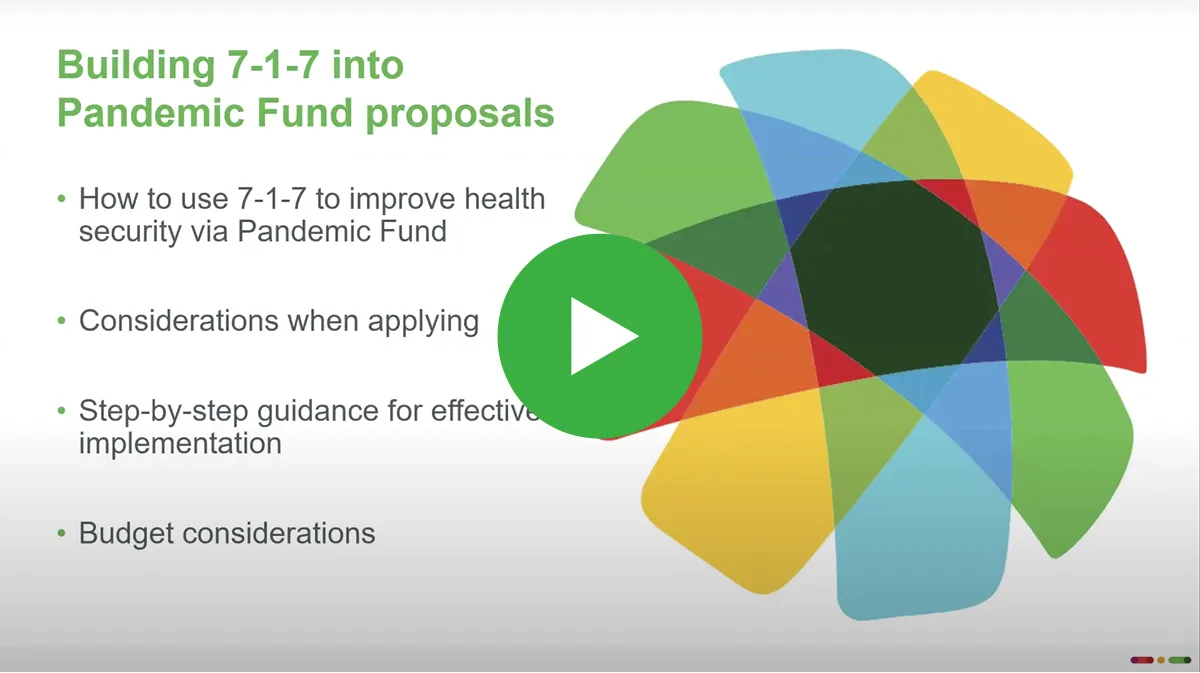
In a 2024 webinar, we address how to build 7-1-7 into Pandemic Fund proposals.