
We spoke with Dr. Peeriya Watakulsin, a physician and field epidemiologist at Thailand’s Department of Disease Control, who leads the adoption of the 7-1-7 target and performance improvement approach.
The interview has been lightly edited for clarity and brevity.
How did you first become interested in the 7-1-7 target?
Dr. Watakulsin: I first heard about 7-1-7 in 2022 when Dr. Tom Frieden of Resolve to Save Lives gave a brief introduction at a meeting of the Department of Disease Control. After that meeting, my team and I started thinking about exploring our own timeliness performance. At the time, I worked in a health region at the border with Myanmar. That’s where Thailand first adopted the 7-1-7 target.
We spent six months learning about the 7-1-7 target. We used resources and training videos from the 7-1-7 Alliance website. In January 2024, we decided to conduct a 7-1-7 retrospective review. We collect a lot of data, but we had not been doing much with it before then. We analyzed more than 300 outbreaks from our regional event-based surveillance system.
The results were very meaningful. They revealed that overall performance declined during the COVID-19 pandemic years (2020-2022) when health priorities shifted. 2023 showed improved response times. Gastrointestinal diseases were more likely to meet the 7-1-7 target due to short incubation periods and clear symptoms, while tuberculosis and sexually transmitted diseases had significantly longer detection and response times due to delayed care-seeking and prolonged treatment periods. Effective training, resources, and emergency preparedness protocols also contributed to better response timeliness.
How did you secure buy-in from your leadership?
We focused on building evidence in favor of the target. That’s why we conducted a retrospective analysis. We brought the results to high-level officials at the national level, including the director general of the Department of Disease Control and the director of the Division of Epidemiology. They suggested starting a one-year pilot to implement 7-1-7 and train staff in all health regions, then evaluate the results.
How have you been approaching this one-year pilot?
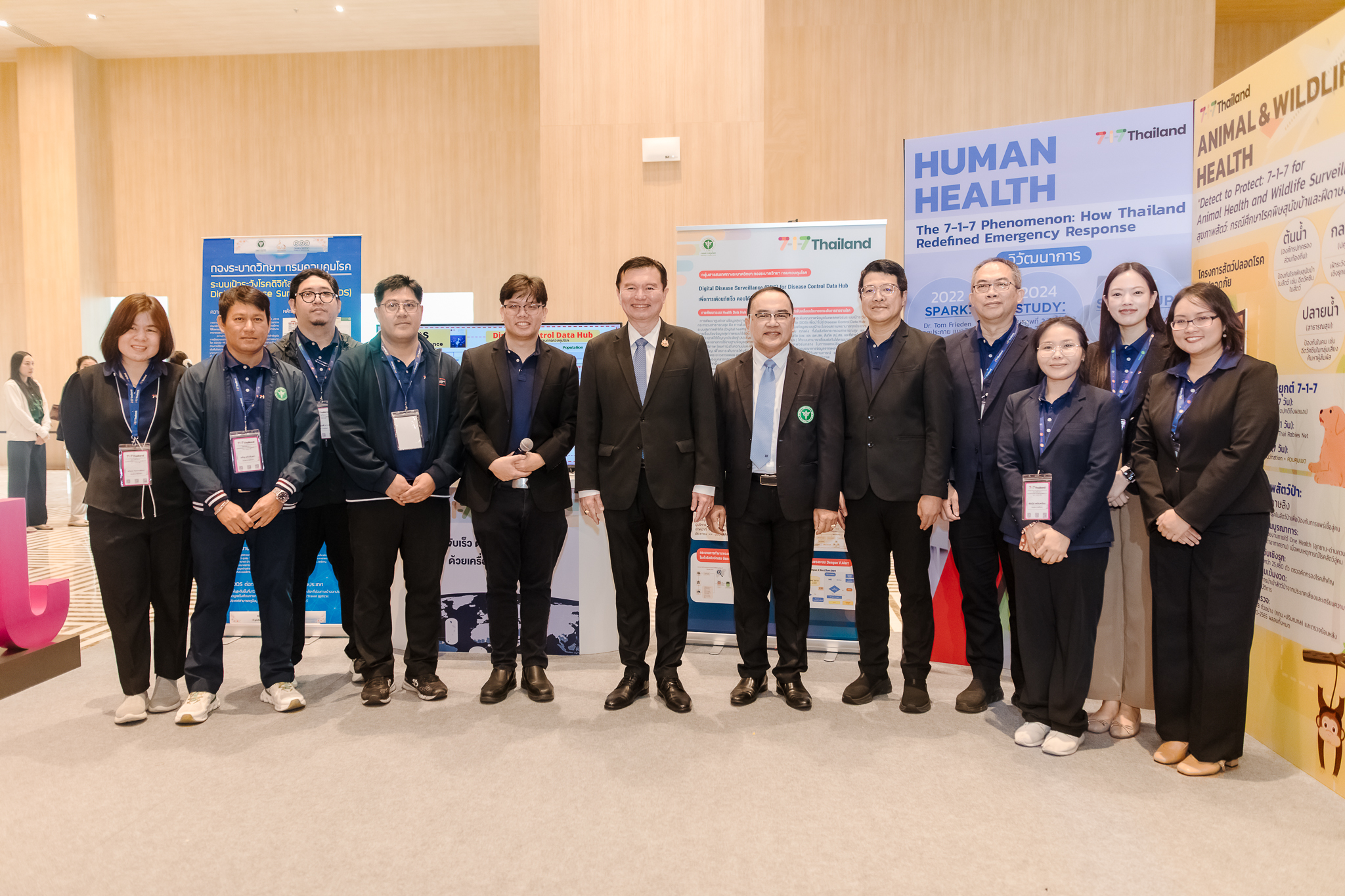
We’ve been implementing 7-1-7 in all 13 health regions. In January, we conducted training workshops for each region. Staff learned the fundamentals and how to collect 7-1-7 data. Following requests for more training, we conducted another round of workshops in April to ensure most staff at the regional health level had a foundation in 7-1-7.
We also have an intermediate-level field epidemiology and management training program, which trains physicians and public health officials from our 77 provinces. This year, 7-1-7 was strategically integrated into the curriculum. Participants received comprehensive 7-1-7 training and applied the target to real-world outbreak investigations. They worked in groups to develop policy briefs based on their investigations, with some successfully incorporating 7-1-7 findings into their policy recommendations—demonstrating practical utility in translating field experiences into actionable public health policy.
Can you share an example of when 7-1-7 has helped you improve outbreak response?
In April 2024, a serious E. coli outbreak emerged in a temporary shelter along the border with Myanmar, resulting in 1,800 acute watery diarrhea cases. We conducted an after-action review with the hospitals, district health offices and NGOs working inside the camp using 7-1-7.
It had taken us almost two months to detect the outbreak. We identified several key bottlenecks: Information had been sent via email, but health staff didn’t open the emails, so we set up an automated surveillance system dashboard. We also trained NGO staff on environmental management for waterborne diseases. That helped us do better when a cholera outbreak emerged eight months later.
Has the success of the cholera outbreak response influenced the wider acceptance of 7-1-7 in the country?
Yes, we use this case study as an example because it demonstrates the importance of timeliness—early detection, notification, and response—in containing disease spread. Our staff was initially concerned about a major cross-border outbreak. But most were surprised when we ended up with just 10 cases on the Thai side after quickly bringing it under control. We applied 7-1-7 before the end of the outbreak and tried to solve bottlenecks immediately. That led to improvements in managing future cholera cases in Thailand.
What are your plans for 7-1-7 beyond the pilot?
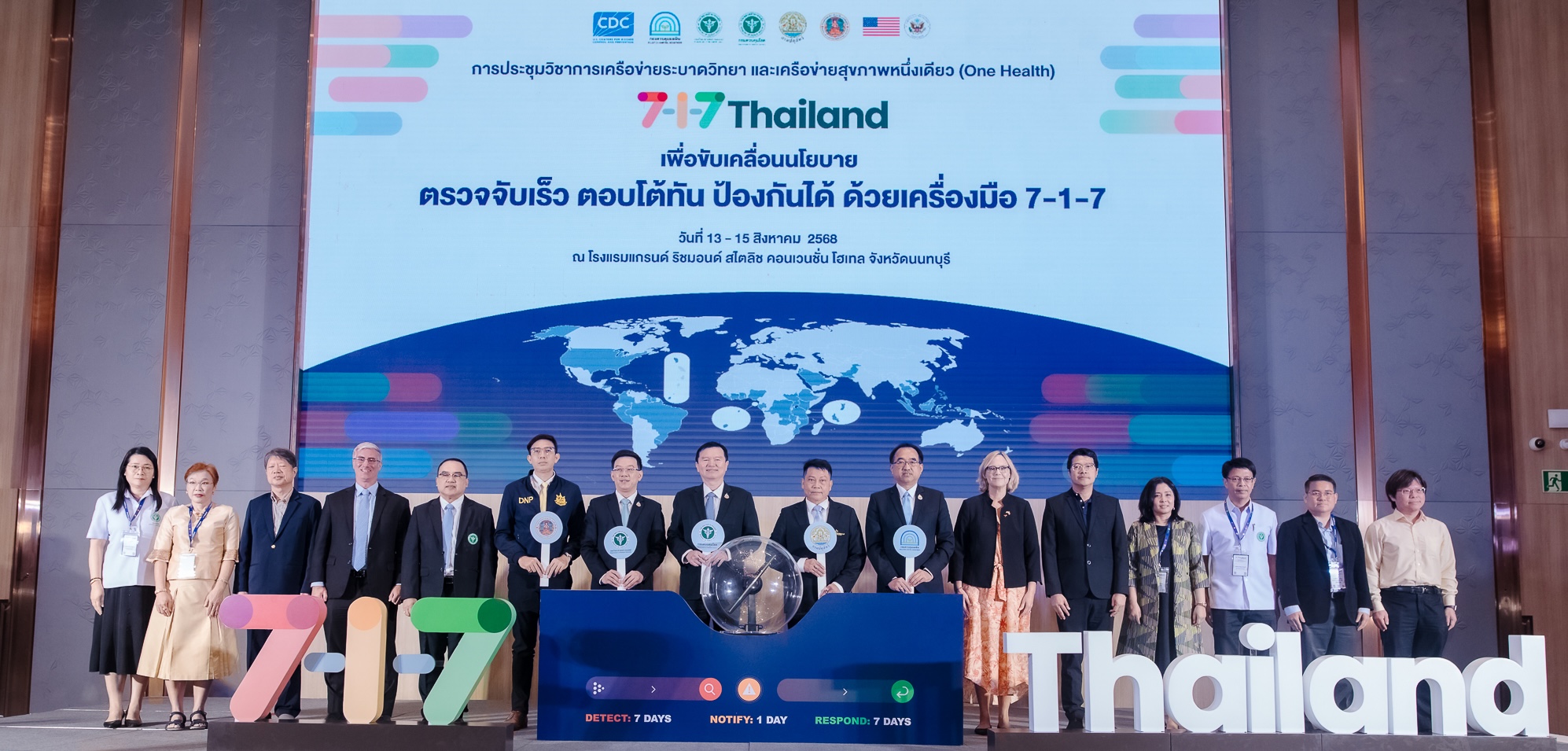
In August, we hosted a national epidemiological and One Health conference to present and discuss learnings from 7-1-7. A focus group discussion raised significant 7-1-7 implementation challenges in our human health surveillance system. Issues ranged from insufficient data in spot reports and investigation forms to inadequate resources, personnel shortages, limited training reach to field levels, and unstable IT systems.
To address these challenges, stakeholders proposed making 7-1-7 a core mission of outbreak response teams and key performance indicator, integrating it into disease investigation forms and surveillance systems, developing connected databases with visualization dashboards, and securing continuous budget support, expanding to community health centers, and creating feedback mechanisms that connect surveillance data to planning processes.
The conference also highlighted promising collaboration opportunities across government agencies to integrate 7-1-7 into One Health approaches. As an example, our Department of Livestock Development shared plans to adapt 7-1-7 for livestock contexts and build evidence for scaling.
We also recently conducted an internal study to explore the use of artificial intelligence and a large language model (LLM) to extract key 7-1-7 information from unstructured epidemiological reports, enabling real-time monitoring. LLMs show significant potential to transform unstructured reports into actionable insights, increase analysis speed and identify systemic bottlenecks in outbreak response.
What recommendations do you have for countries that are new to 7-1-7?
Testing 7-1-7 quickly with your own data from past outbreaks is important. Conduct an initial analysis and learn from it. We started learning from 7-1-7 Alliance materials by ourselves. Using 7-1-7 might appear challenging at first, but once you start, you’ll understand how valuable it is.
Improving our health systems is critical. Initially, we couldn’t answer questions about our timeliness performance. If we didn’t know about our current performance, how could we improve? That was our starting point.
We didn’t know we might go this far. 7-1-7 is a good tool but, like every new tool, I was concerned about its uptake among our staff. I was surprised to see how many quickly saw 7-1-7’s potential and came onboard.
Acknowledgement
Dr. Watakulsin would like to acknowledge the U.S. Centers for Disease Control and Prevention (U.S. CDC), Thailand Country Office, and Dr. Richard Garfield, Division of Global Health Protection, Global Health Center, U.S. CDC, for providing technical support and training. He also extends his gratitude to the Regional Strategic Assistance (RSA) Section, U.S. Embassy, Thailand for progressing multisectoral collaboration, as well as the 7-1-7 Alliance, Resolve to Save Lives, Wellcome Trust and The International Union Against Tuberculosis and Lung Disease for supporting operational research in Thailand.